

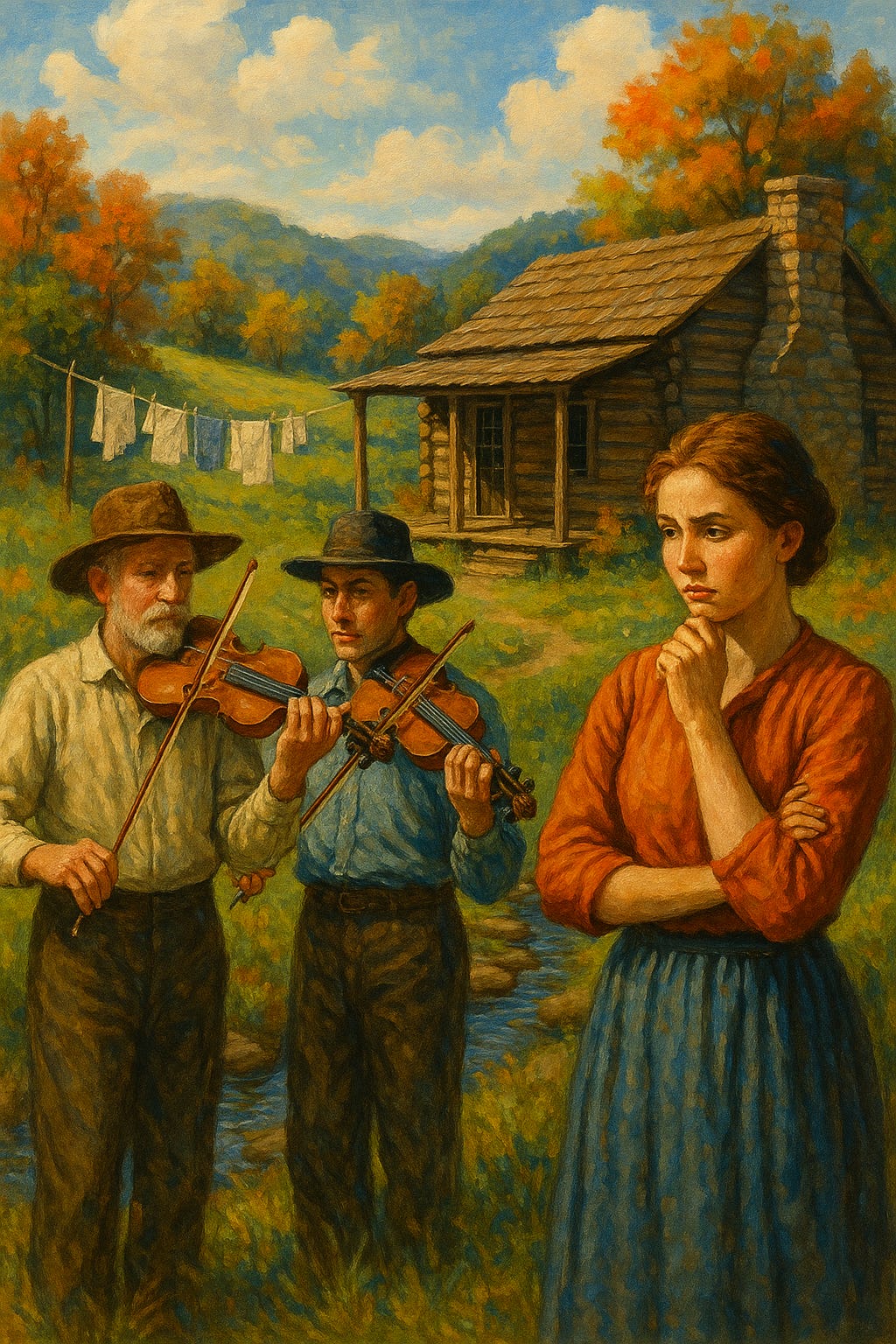
Long before microphones and contests, “Sally Goodin” was just a tune that made people move. Its earliest traces reach back to the southern Appalachians of the 1800s, where it existed in two simple parts — enough for a dance floor and a long night. Like so many mountain tunes, it traveled not by ink and paper but by ear and memory. Each fiddler bent it to their own rhythm, giving the melody new life every time a bow met the strings.
Some say it wasn’t even called “Sally Goodin” at first. In Kentucky, it may have gone by names like “Boatin’ Up Sandy” or “The Old Bell Ewe and the Little Speckled Wether.” One story claims Confederate soldiers under John Hunt Morgan were camped along the Big Sandy River during the Civil War when they renamed an old local tune for the woman who ran the nearby boardinghouse — Sally Goodin, who fed and cared for them while they rested. Another tale tells of a fiddle contest, where Sally chose her future husband — a fiddler named Goodin — by the tune he played for her. Whether fact or folklore, the name stuck, and the tune became inseparable from it.
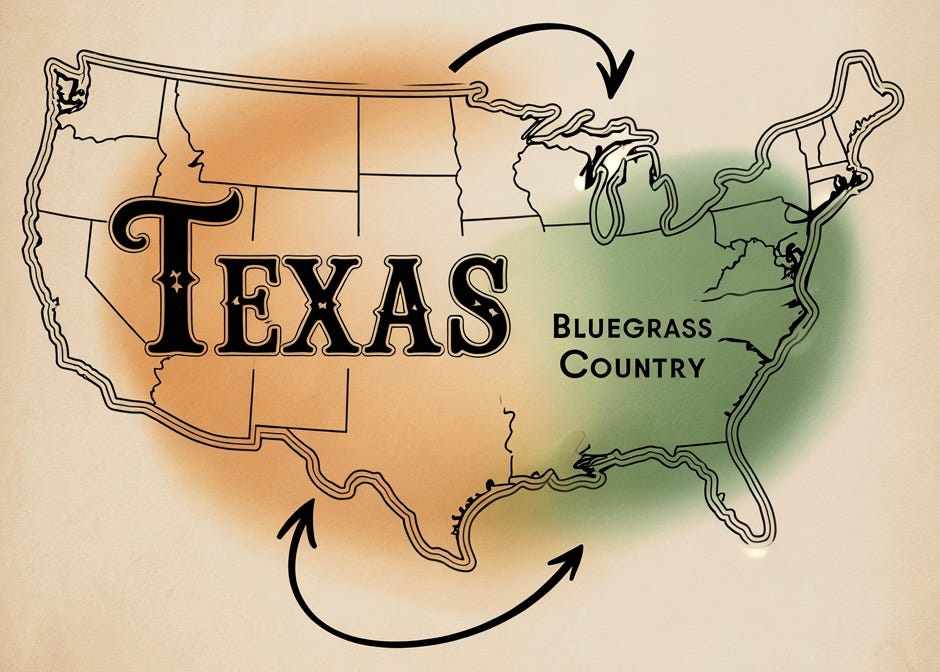
As the melody drifted westward, “Sally Goodin” took on a new identity. In Texas, where fiddlers prized inventiveness and tone, a two-part dance number became a multi-part exhibition. A fiddler might stretch it into ten or twelve variations — long phrases, double-stops, and bow pulses that tested skill and imagination. What began as a social dance tune turned into a personal challenge, a way of saying, this is who I am through the fiddle.
That evolution reached the world stage in 1922, when a fiery red-haired Texan named Eck Robertson walked into a New York studio and recorded “Sallie Gooden” for Victor Records — one of the first commercial fiddle recordings ever made. Robertson’s version exploded with energy, cross-tuned in AEAE, and brimming with the rhythmic drive that would come to define Texas-contest style. He claimed to have played it “up to fourteen different ways,” and listening to that record today, you can feel the confidence of a man standing at the border between folk tradition and recorded history. It was a watershed moment: fiddle music had entered the modern age.
By the time Byron Berline brought the tune into Bill Monroe’s band in the 1960s, “Sally Goodin” had already become legend. Berline’s version carried the Texas fluidity into the sharper edges of bluegrass — fast, elegant, and meticulously phrased. From there, it became a standard in nearly every fiddler’s vocabulary, the kind of piece you could call at a jam anywhere in America and someone would smile and take the lead.
What makes “Sally Goodin” remarkable isn’t only its endurance but its adaptability. In the Ozarks, players like Bob Holt kept it closer to the old two- or three-part dance form. In Texas, it remained a contest showcase. Bob Wills and the Texas Playboys swung it through dance halls with steel guitar and drums. The same melody could sound like a frontier ballad, a jazz improvisation, or a contest warm-up — depending on who held the bow.
And next year, as the United States turns 250 years old, it’s worth pausing to notice what that means. A tune like “Sally Goodin” — born in the hills, shaped by movement, redefined in each new region — is America. It carries the fingerprints of migration, imagination, and reinvention. From Appalachian porches to Texas stages, it’s a melody that keeps traveling, keeps changing, and still belongs to everyone who plays it.
That’s why it endures. “Sally Goodin” isn’t just one fiddler’s tune or one generation’s memory. It’s a real American classic — alive each time the bow draws its first note.
🎻 Watch the latest Fiddle Canon Minute:
⸻
Written as part of the Reflections Series for The Fiddle Canon Project — exploring the living traditions, histories, and voices within American fiddle music.
© 2025 Brian Arrowood. All rights reserved.