
A Reflection on Music, Humanity, and the Transformation of Thought
Sound changes, but the soul never forgets.

When the violin first took shape in Europe, it belonged to a world that believed in order — a world of cathedrals and candlelight, of craftsmen and scholars, of minds trained to find meaning in symmetry. To play music there was to take part in a sacred architecture: every note placed with purpose, every phrase designed to mirror the harmony of creation itself. People sought truth through discipline. They built their days around structure and hierarchy because they believed that within order lived the divine.
But when that same instrument crossed the sea, it entered a world that did not have the luxury of order. In the hills of Appalachia, the plains of Texas, and the red clay of Georgia, life was weathered, physical, unpredictable. People here worked the land, mended their roofs, and carried grief and laughter side by side. They were thinkers too, but their thinking took the shape of survival — practical, rhythmic, unornamented.
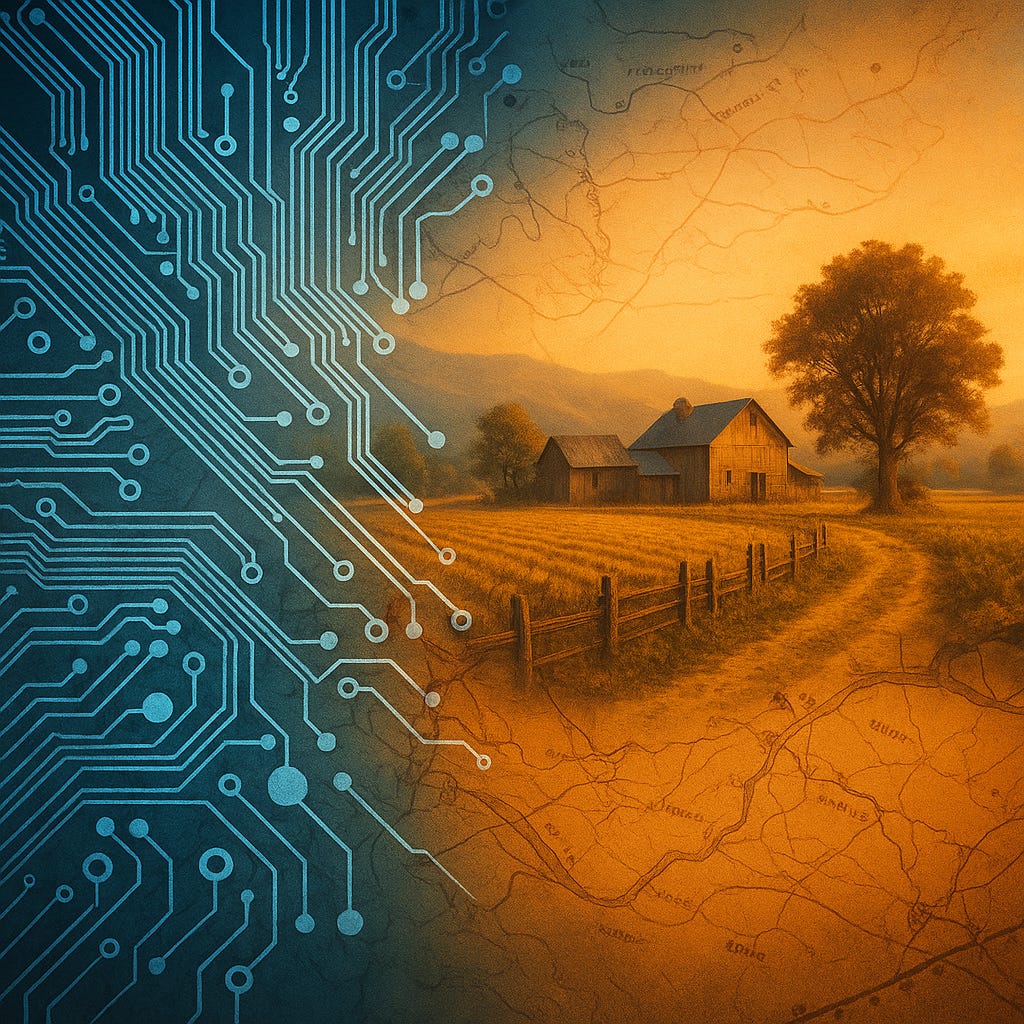
The violin had to change its voice to speak to them. It shed its courtly accent and learned the rougher dialect of need. The music of thought became the music of living. No longer an instrument of performance, it became an instrument of gathering — something to dance to, to pray with, to soften the edges of exhaustion at the end of a long week.
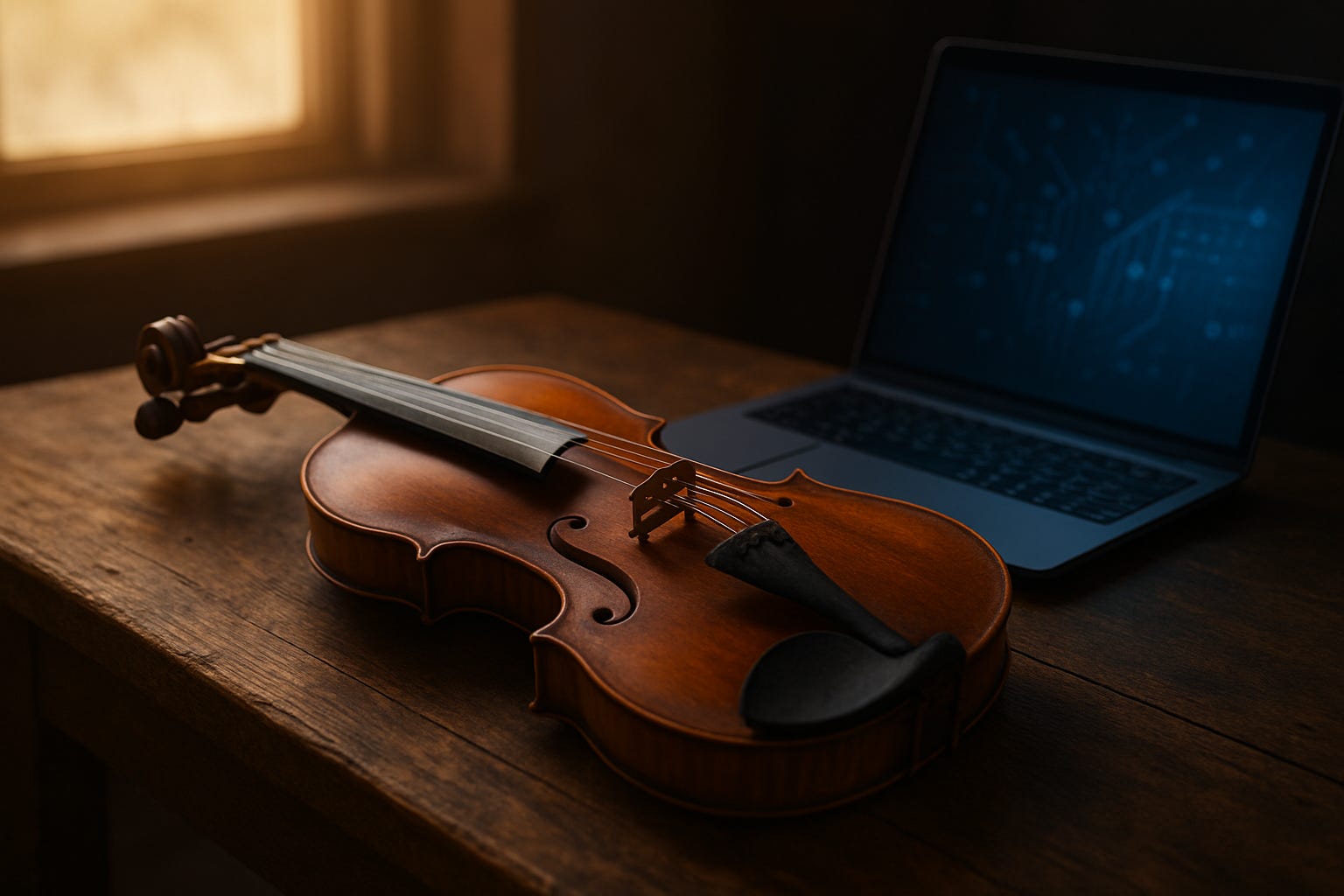
A Paganini caprice could lift the mind toward perfection; a fiddle tune could lift the body toward joy. One was a feat of concentration, the other a gift of motion. Yet both, in their own way, reached for the same horizon — that moment when sound releases the weight of being human.
The difference was not only musical; it was philosophical. In Europe, people sought meaning through mastery. In America, they found meaning through movement. The first trusted intellect to bring them closer to truth. The second trusted rhythm to bring them closer to one another.
At a barn dance, the philosophy was simple: if you can still play, you can still live. The bow became the pulse of the room. The shuffle of feet on the floorboards became a kind of collective heartbeat. Music wasn’t a thing to be admired — it was a thing to belong to.
In those gatherings, you could hear what the frontier had done to the mind of the violin. Its tones carried both struggle and survival, refinement and release. It became the voice of a people learning to balance thought with feeling, precision with presence. The music didn’t have to be perfect; it only had to be true.
And maybe that is what the violin teaches us still — that every generation remakes its sound according to what it needs most. Once, it served intellect. Then it served community. Now it lives in a world where even sound itself can be generated by machines.
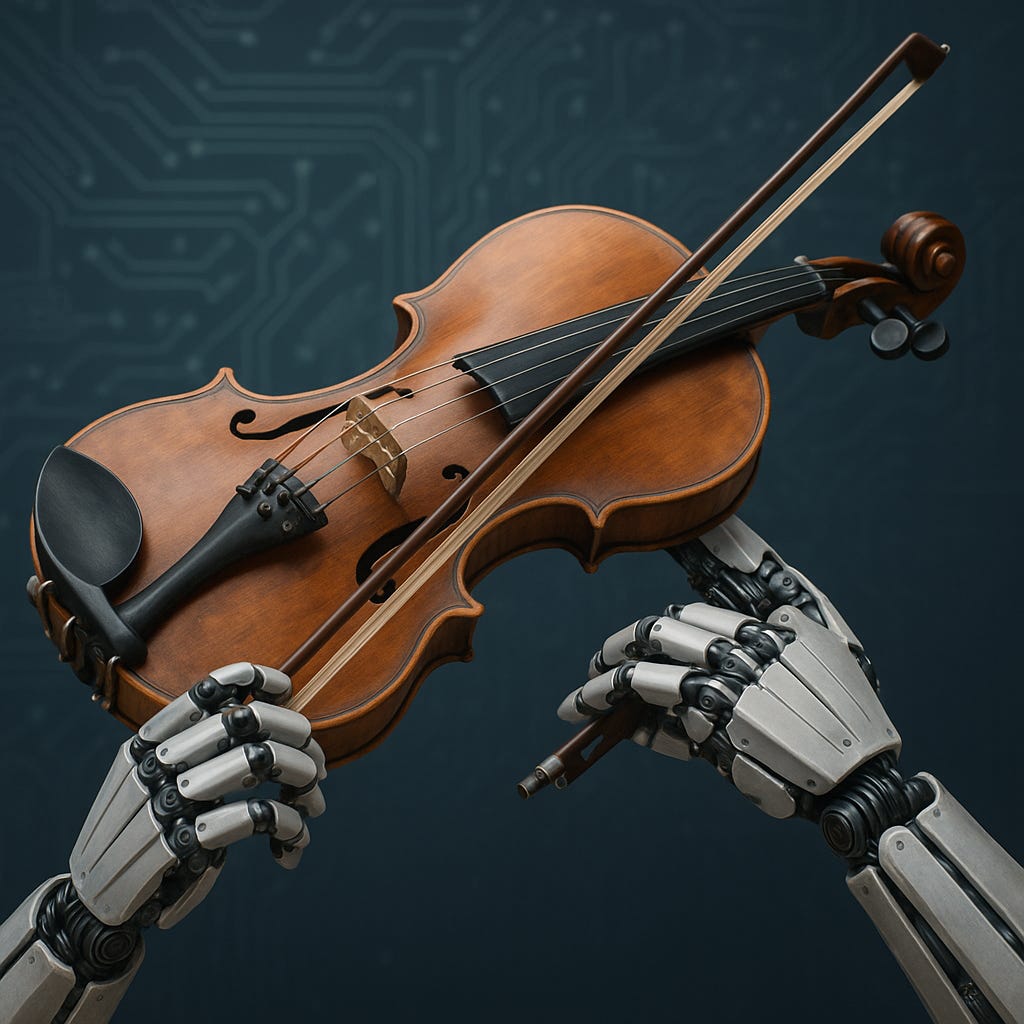
What happens when the instrument that once spoke for our hearts begins to share its voice with technology? When the bow is replaced by code, and the player by algorithm, will the music still carry the warmth of human struggle? Or will the violin — as it always has — find a new way to answer, to adapt, to sing the truth of whatever age it finds itself in?
Perhaps that is the question of our time: whether the next great transformation of the violin will come not from the hands of the player, but from the heart that still insists on being heard.
⸻
Written as part of the Reflections Series for Music and AI — exploring the evolving relationship between art, technology, and musical expression.
© 2025 Brian Arrowood. All rights reserved.