

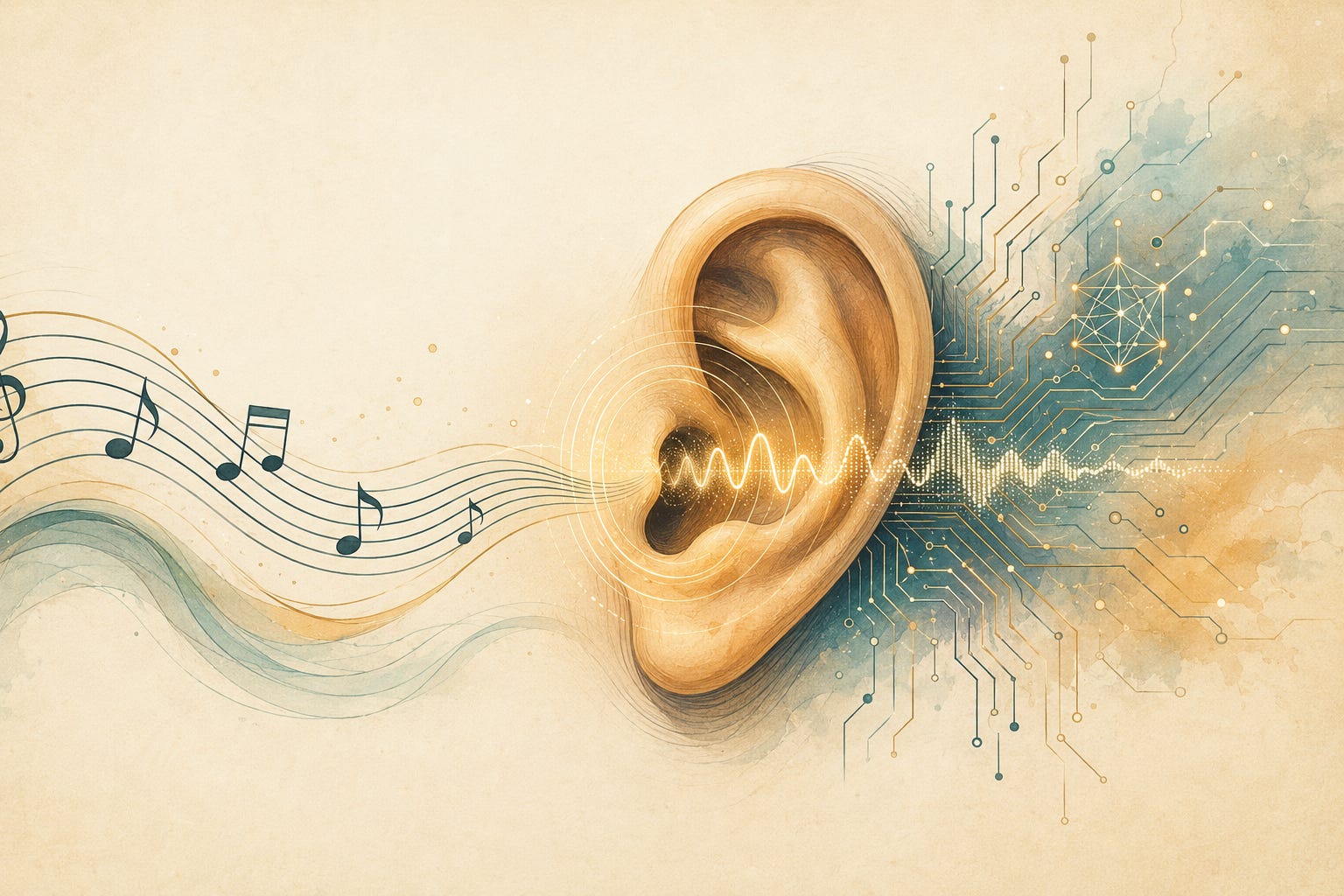
There was a time when pitch was something you felt.
It wasn’t measured; it was lived — a tension between heart and ear, between where the note began and where it wanted to go.
Every fiddler knows this space.
You lean into a note, hold it just shy of the center, and let the sound shimmer before it settles. It’s the difference between being right and being alive.
In bluegrass, old-time, and early country music, those fractions of sound — the ones that hover slightly sharp or fall just low — carry more truth than any tuner ever could. They’re where emotion hides. They’re where the body and the instrument meet halfway.
Long before digital screens and software corrections, musicians understood that pitch was never a fixed point. It was a relationship — something negotiated in the moment between the player, the instrument, and the listening ear.
The great fiddlers knew this instinctively.
A note could lean toward the major third without quite arriving, or settle into a blue tone that hovered between sorrow and sweetness. A melody might bend just enough to give it gravity, just enough to give it lift. These were not mistakes; they were decisions made in fractions of a second, guided by feeling rather than calculation.
The history of American music is filled with these living notes.
Listen closely to the early recordings — the old 78-rpm discs where the sound wavers and breathes. The pitch is not locked to a grid. It moves. It sways. It searches. Sometimes the instrument drifts a little sharp as the bow digs deeper into the string. Sometimes it falls just under the center as the player leans into the weight of the melody.
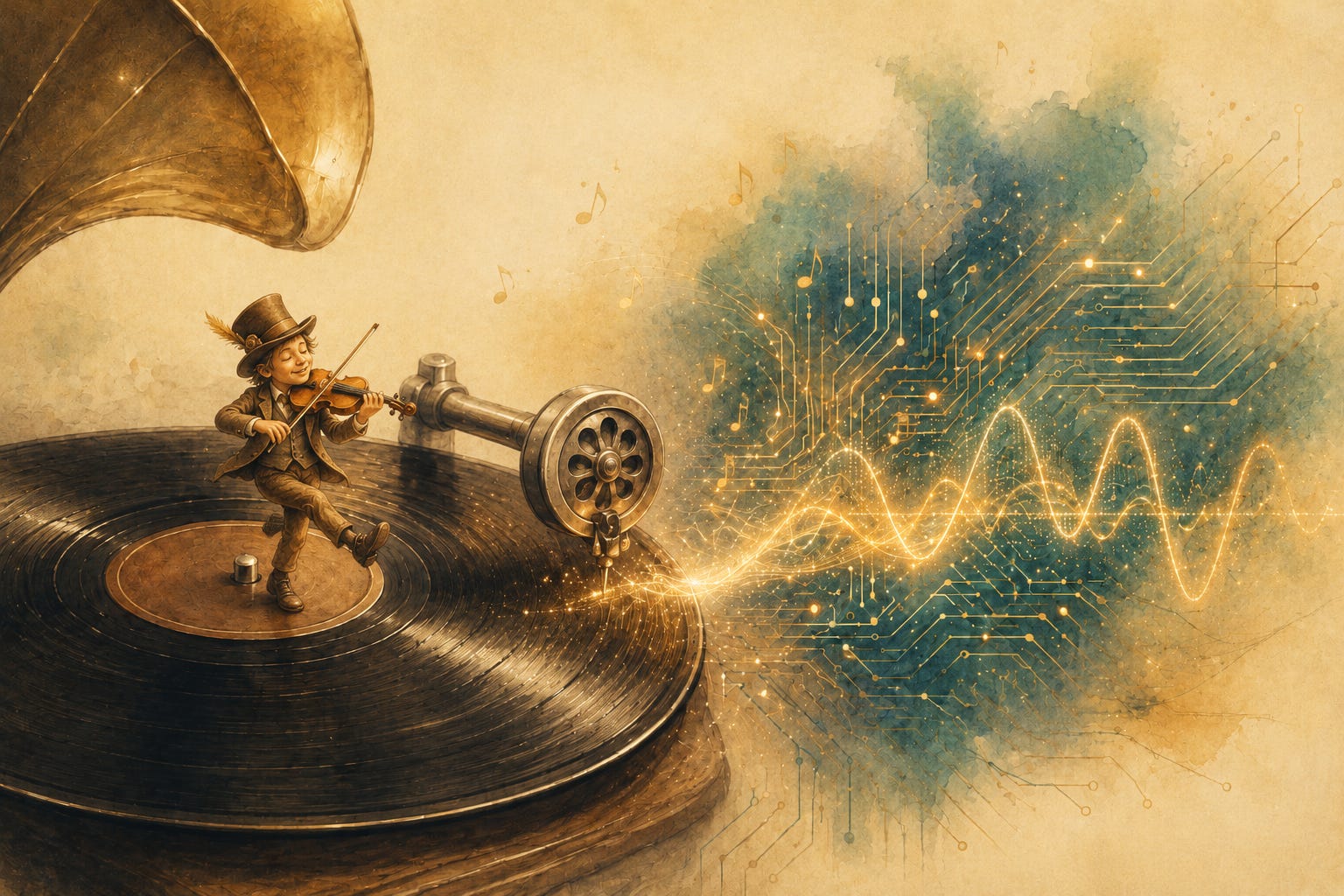
And yet those recordings feel unmistakably alive.
In the fiddle world, this understanding runs even deeper.
Many of the sounds that define traditional fiddle music live deliberately outside the architecture of equal temperament — the standardized tuning system that fixes every note into a measured grid used by instruments like the modern piano.
The so-called blue notes, the lifted thirds, the leaning sevenths — these are not accidents of imperfect tuning. They are expressive choices shaped by generations of listening and imitation.
A fiddler might raise the third of a chord slightly to brighten a melody, or settle it lower to darken the color of a phrase. In a waltz, the pitch may widen just enough to let the harmony breathe. In a breakdown, the leading tone might sharpen with urgency as the bow digs harder into the string.
These movements are subtle, often smaller than the width of a tuner’s display. But to the ear, they matter enormously.
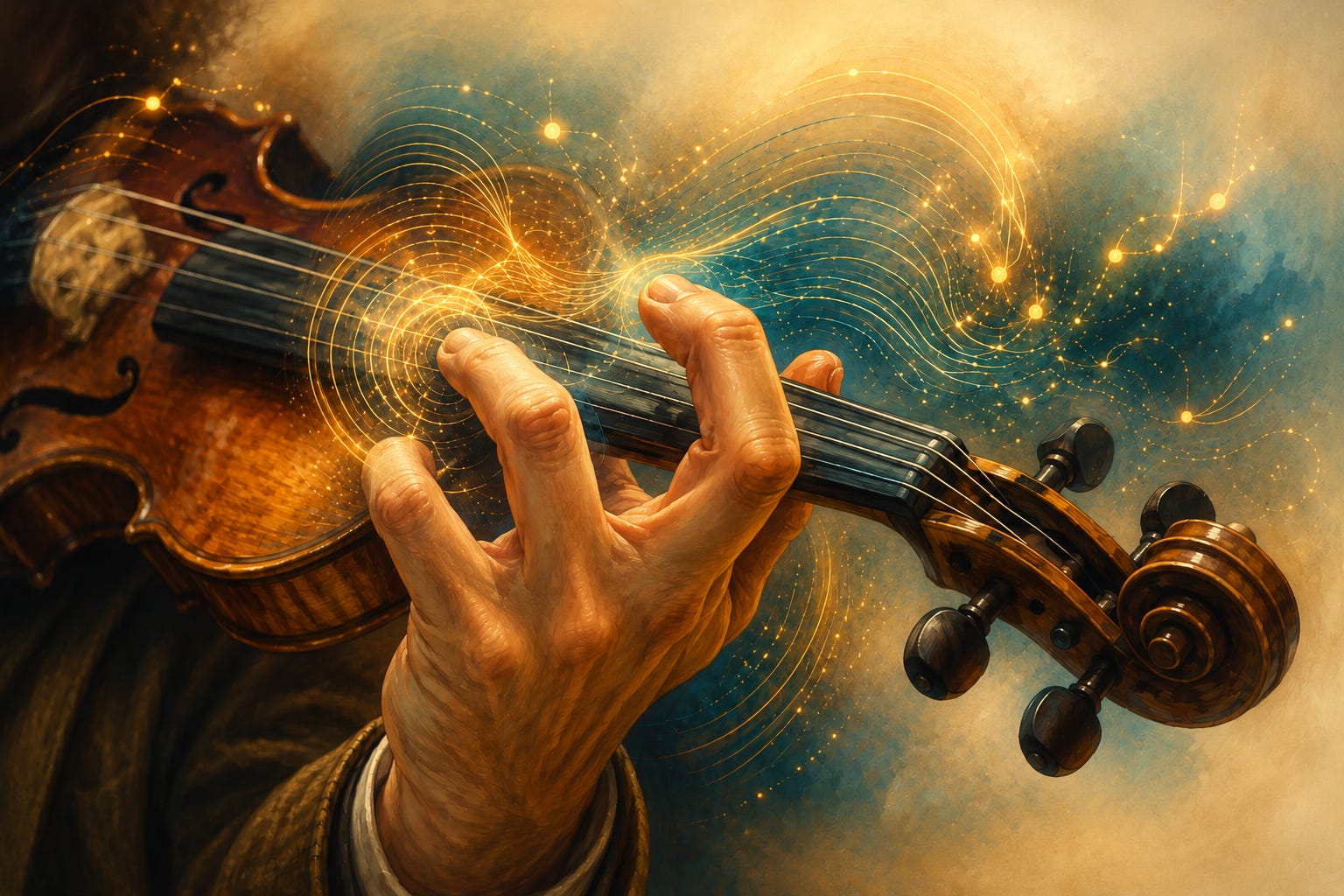
They give the music gravity.
They allow a melody to stretch against its harmony the way a spoken sentence stretches against grammar — bending the rules just enough to reveal personality.
Old recordings of Appalachian fiddlers reveal this constantly. The pitch shifts not because the player lacked discipline, but because the music itself is responsive. A room full of dancers can pull the tempo forward. The resonance of the instrument shifts as bow pressure changes. The player leans into a note because that moment in the tune demands it.
A tuner can show where the center lies.
Software can move a note closer to it.
An algorithm can analyze thousands of pitches and calculate their statistical averages.
But the human musician does something different.
Pitch, in human hands, is not a fixed coordinate.
It is a field of tension.
A note may approach its center from below, hover just above it, or pass through it before settling. These movements are not errors. They shape the meaning of the phrase.
The musician moves through that field the way a storyteller moves through language — stretching, leaning, and shaping the sound until the phrase feels alive.
Then came the machines.
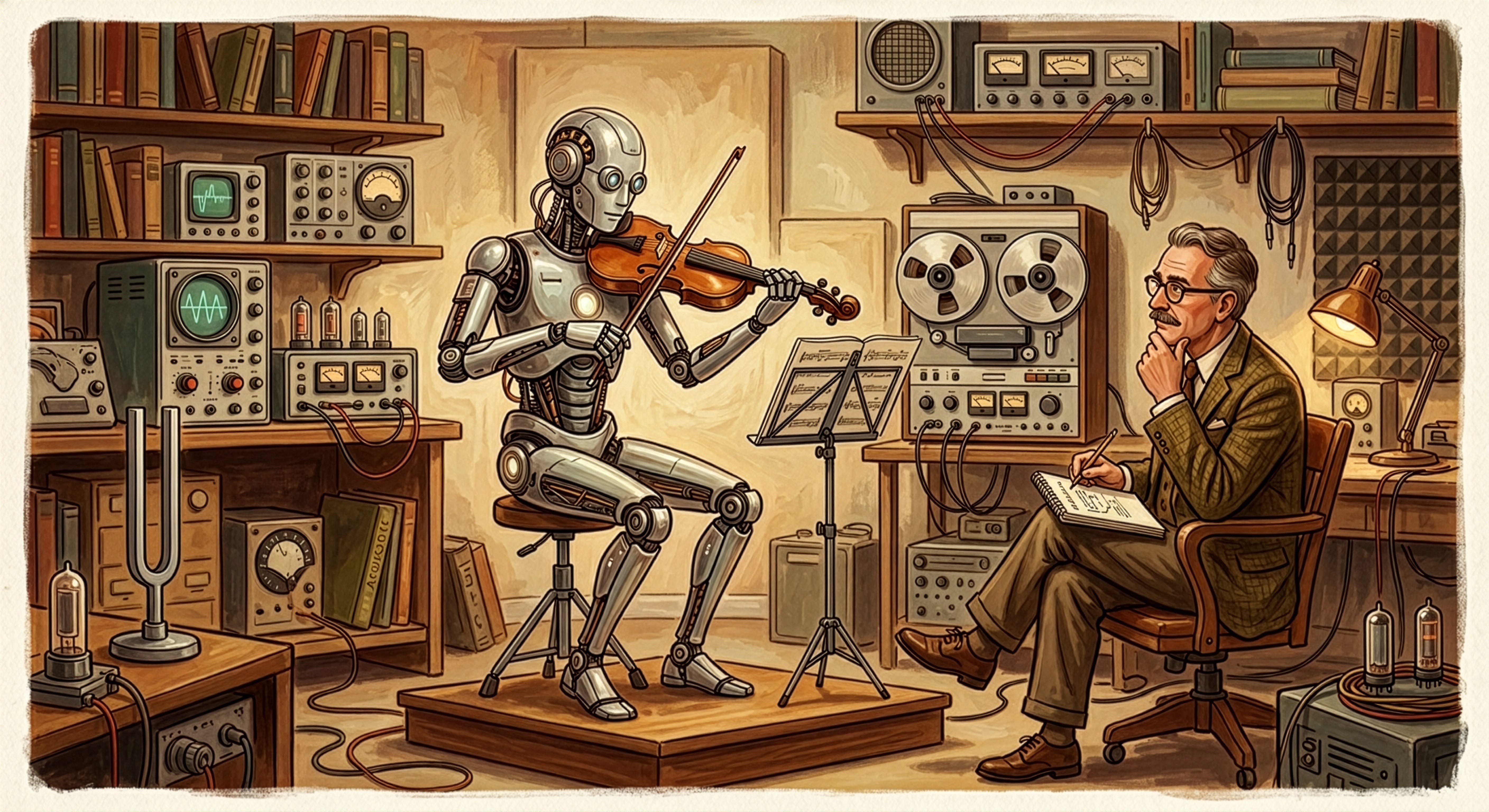
First the digital tuner, then pitch correction, and eventually the learning systems of artificial intelligence.
At first, the change seemed harmless. The tuner appeared as a small glowing device that promised certainty. For the first time, musicians could see pitch displayed in real time — a needle, a light, a number telling them precisely when the note had arrived.
It was useful.
But it changed something subtle.
The ear, once the final authority, began to share its judgment with the screen.
Soon after came pitch correction — tools designed to repair what the ear might miss or forgive. At first they were assistants, gently nudging notes toward the center. But as the technology advanced, the corrections became more aggressive and more automatic.
The note no longer required persuasion.
It could simply be moved.
In the modern studio, producers and engineers rely on software that can detect the smallest deviation from perfect pitch and correct it instantly. A vocal phrase can be aligned with mathematical precision. A violin passage can be reshaped so that every note lands exactly where theory places it.
The result is often impressive.
The recordings sound clean.
Accurate.
Perfect.
But perfection carries its own silence.
Because something else disappears — the small fluctuations that once told us a human being was making decisions in real time. The hesitation before a note settles. The breath that pushes a phrase forward. The slight deviation that reveals intention.
Those details are small.
But they are the fingerprints of intention.
Intonation was never about perfection.
It was about the permission to miss — to reach for the tone and fall slightly short, and in that falling reveal something real.
A perfectly centered pitch may satisfy the eye of the tuner, but it does not always satisfy the ear of the listener.
The ear listens for motion — the way a note approaches its destination, the way it leans into a harmony or brushes past it.
Artificial intelligence extends that trajectory to its logical end.
Modern systems can analyze pitch in real time, detect microscopic deviations, and reconstruct performances that follow statistical patterns of human playing.
They can learn where notes tend to move.
But they cannot determine why those movements occur.
A machine can replicate patterns of deviation, but the impulse that produces them — the decision to lean sharp, to settle low, to hold tension for a fraction longer — remains outside the system.
That impulse is not statistical.
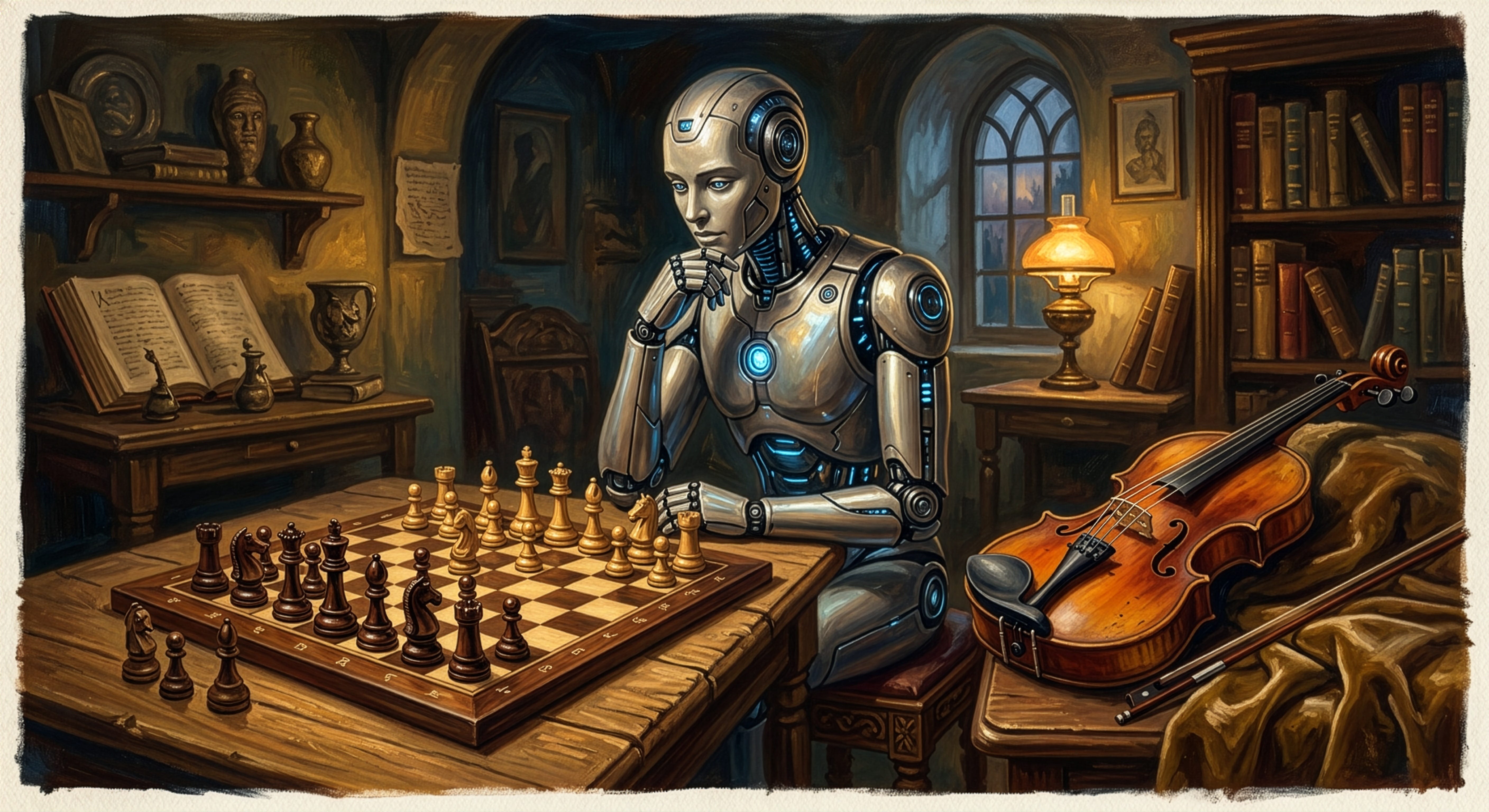
It is interpretive.
And interpretation leaves evidence.
Not in perfect notes, but in the unstable space around them.
It becomes evidence of presence.
⸻
Written as part of the Reflections Series for Music and AI — exploring the evolving relationship between art, technology, and musical expression.
© 2026 Brian Arrowood. All rights reserved.