
Musical Interpretation Reimagined
On Artificial Intelligence, Language, and the Nature of Improvisation

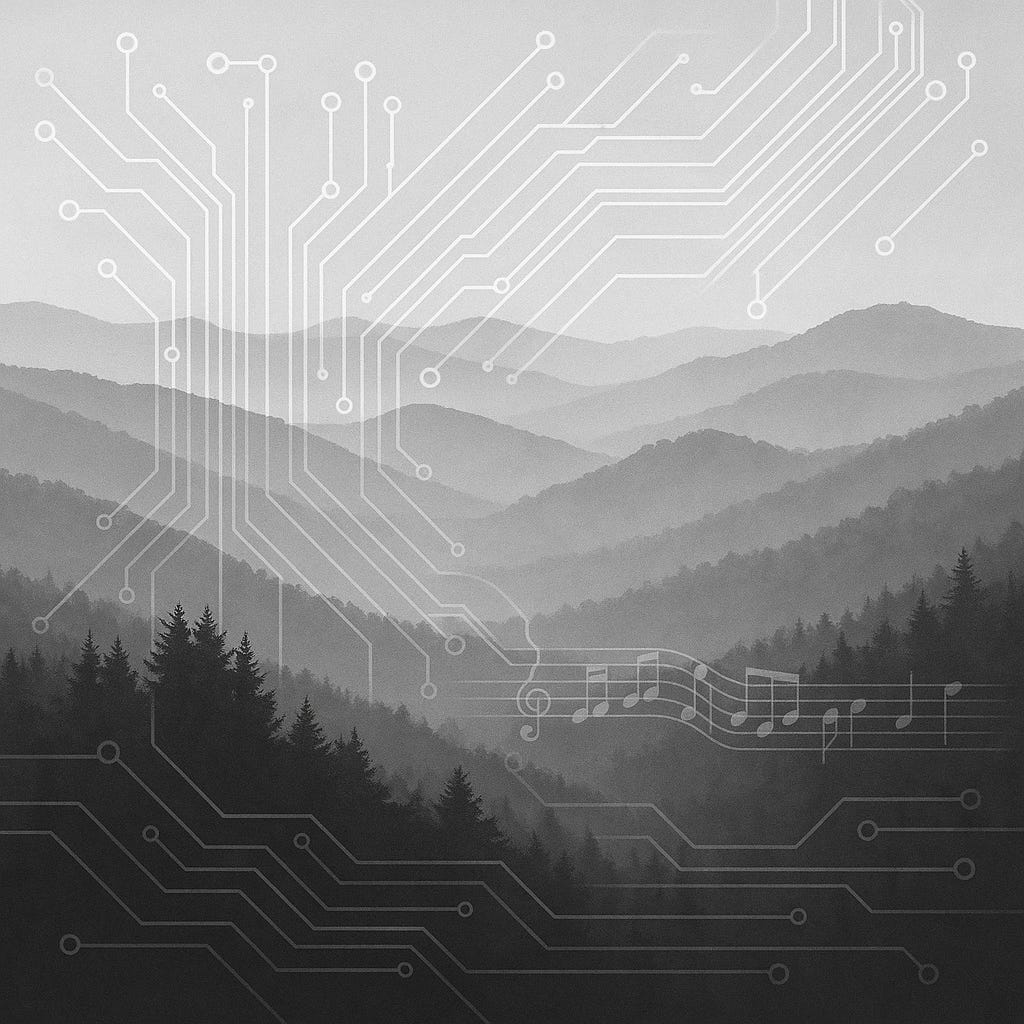
Artificial intelligence has made rewording almost effortless. A thought can now be reshaped in seconds—flowing into new phrasing, rhythm, and tone. The weight once placed on a single, perfect arrangement of words has begun to fade. Yet rather than diminishing expression, this fluidity reveals something beautiful: that meaning isn’t trapped in the sequence of words, but lives in the relationships between them.
It’s much the same with music. For generations, musicians have grown attached to one phrasing or one “correct” way of playing a melody—treating it as sacred. But just as language can be infinitely reimagined without losing its truth, so can music. Every performance—a note delayed, a bow drawn longer, a tone darkened or brightened, the flex of a wrist or the subtle inhale that precedes a phrase—is another interpretation of the same idea. Breath itself becomes part of the phrasing, renewing each note with the life of the moment. As the player breathes, so too does the music. Each repetition carries not imitation, but reincarnation.
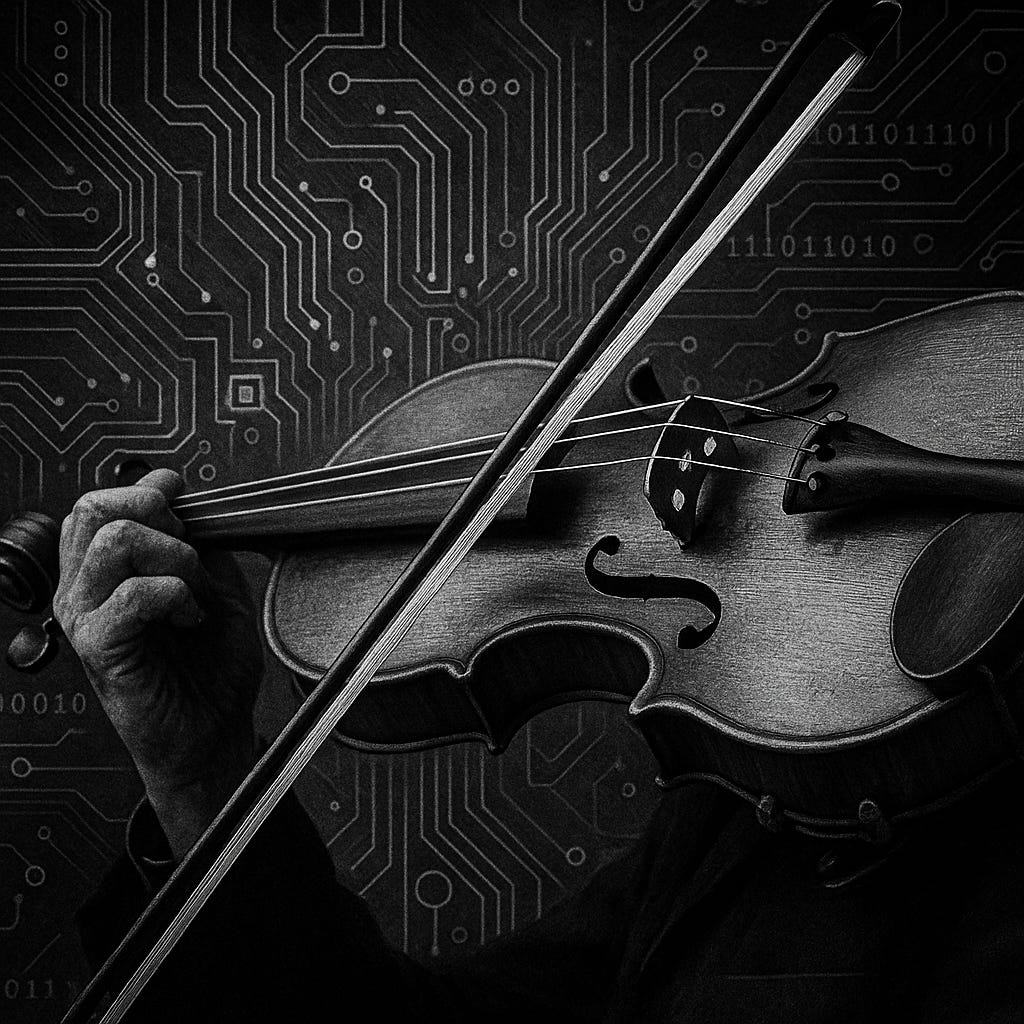
Hence we arrive at a fundamental truth of improvisation—the art of creating anew within familiar boundaries. Improvisation isn’t the rejection of form; it’s the renewal of it. Each variation, whether in a Bach partita or a bluegrass breakdown, reminds us that art lives not in perfection but in presence. The breath, the hesitation, the muscular rhythm of intent—all are proof that creation happens in real time.
If writing has become an improvisation across endless drafts, then music has always been that same improvisation in sound. What AI is now revealing to writers is what musicians have long known in their bones—that art isn’t about repetition, but reinterpretation.
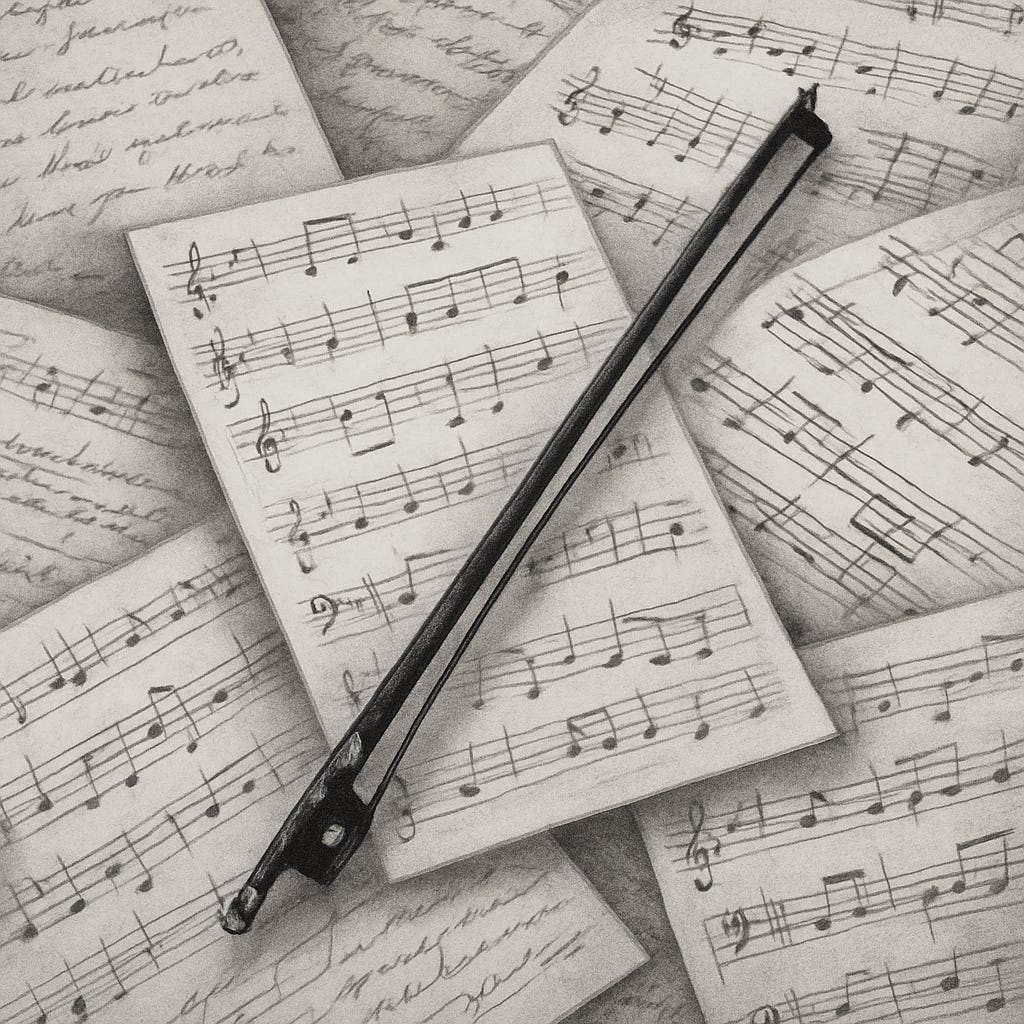
The future of AI in music will extend this truth even further. Already, intelligent systems can generate melodic ideas, reharmonize progressions, and emulate particular players’ phrasing styles. What they still lack is intent—the human reason behind the choice. But that gap is closing quickly.
Within the next few years, musicians will be able to take their own compositions and explore limitless stylistic directions: Appalachian one moment, jazz or classical the next. They’ll ask questions like, What if I played this tune with Appalachian bowing but jazz harmony? What if my tone carried Kenny Baker’s steadiness but Grappelli’s lightness?
By the early 2030s, AI may act less like a machine and more like a collaborator—a responsive musical partner capable of adapting to a player’s nuance and feel. It will allow artists to reshape their own work in countless ways while keeping the soul intact.
At that point, the creative process in music will mirror what AI has already done for language—turning every work into a living dialogue of possibilities. Both in words and in notes, the essence will remain the same: a single voice, interpreted endlessly, reshaped by imagination, yet always unmistakably human.
And perhaps that’s the real music of it all—the way meaning continues to breathe, whether through strings or sentences. We keep rewriting, replaying, and rediscovering, not to perfect the sound, but to stay alive within it.
⸻
Written as part of the Reflections Series for Music and AI — exploring the evolving relationship between art, technology, and musical expression.
© 2025 Brian Arrowood. All rights reserved.