
Playing the Timeline
A reflection on music, mind, and the architecture of creative systems

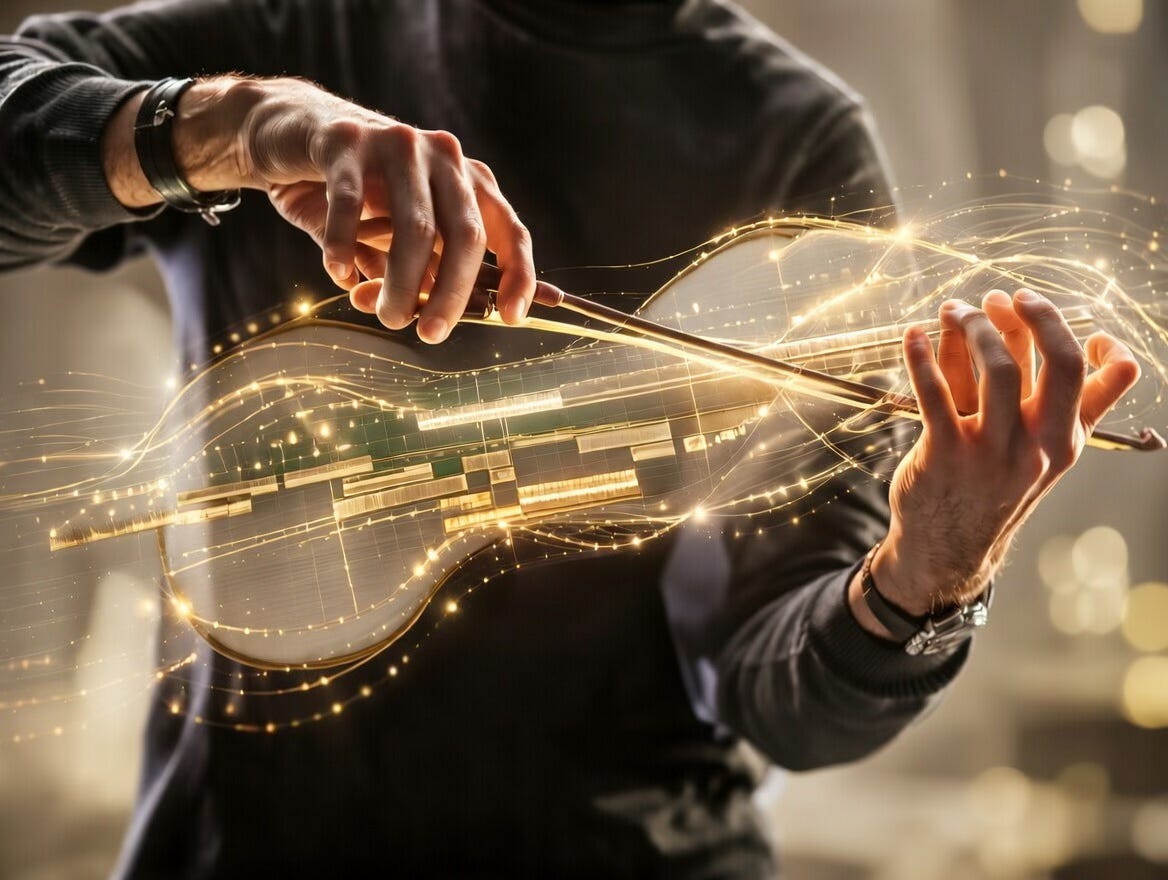
Playing the violin is often described by neuroscientists as one of the most demanding bilateral tasks the human brain performs. Each hand operates according to a different logic.
The left hand is architectural. It maps the geography of the instrument, placing each finger at precisely the right point along the string to produce the correct pitch. Without frets to guide it, the violinist relies on a finely developed spatial awareness—distance measured not with rulers but with memory and sensation. The fingertip learns the exact resistance of the string, the slight give before the pitch locks in.
The right hand, by contrast, is expressive. The bow governs the voice of the instrument: pressure, speed, angle, articulation. It shapes the breath of the music and determines the rise and fall of the phrase. A slight increase in bow speed thins the sound; a degree more pressure and it darkens.
Every violinist eventually learns that these two systems must become independent yet synchronized. The left hand determines where the music lives. The right hand determines how it speaks.
Only when the two move together does the instrument truly begin to sing.
Over time, I began to notice that something remarkably similar was happening in the studio.
What began as a collection of devices—mouse, navigation controller, macro surface, and monitoring system—gradually organized itself into a structure that resembled the neurological architecture of violin playing.
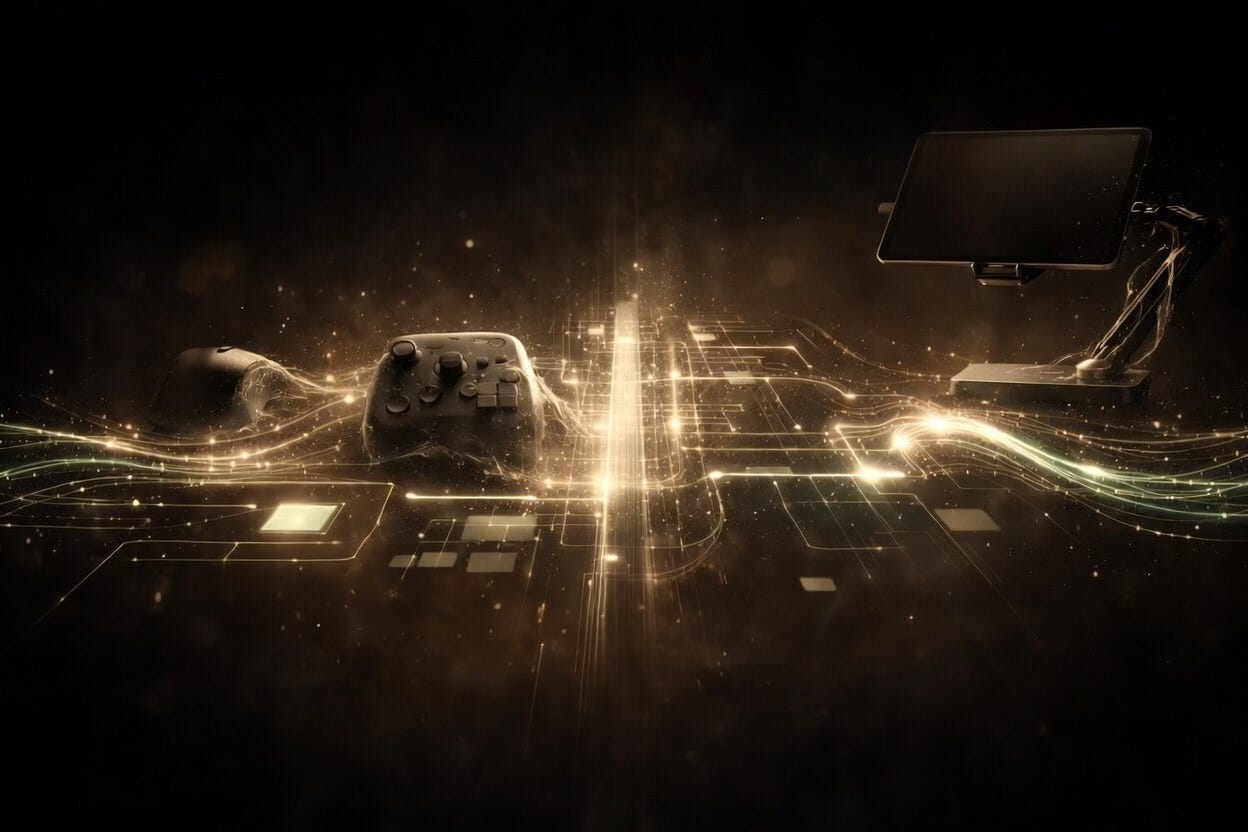
The right hand became the place of expression. Through the mouse, it performs the smallest movements of the editing process: trimming frames, shaping curves, placing transitions. Like the bow, it governs the fine articulation of motion.
The left hand became the place of structure. Through navigation controls, it moves through the timeline—zooming into a passage, shifting position, mapping the geography of the work in time. A passage zoomed out becomes landscape; zoomed in, it becomes phrase.
When these two hands synchronize, the act of editing changes character.
You aren’t editing.
You are playing the timeline.

Modern creative systems introduce another layer that belongs to neither hand alone.
In the studio this layer appears through automation: macro controls that shift the entire environment from one state to another. A single command may open a recording workspace, launch editing software, or reorganize the tools on the screen.
This layer resembles the role of the mind itself. The mind does not move the hands directly; it determines the mode of action—rehearsal, interpretation, performance. Each mode asks different things of the hands and shapes what the hands are even capable of noticing.
Above these layers sits one final element: awareness.
A violinist listens constantly, adjusting pressure, balance, and intonation in response to the sound returning from the room. In the studio, monitoring fulfills the same role. It is the place where the musician hears what has happened and responds.
When these layers align—precision, navigation, automation, and monitoring—the technology becomes transparent.
That transparency makes something else possible: anticipation.
The violinist begins to move slightly ahead of the phrase. The bow prepares its pressure before the swell of the note. The hand shifts position before the new pitch arrives.
The same thing can happen in the studio. As familiarity grows, the mind begins to anticipate the next movement along the timeline.
A violin is only wood and string until a player learns the conversation between the left hand and the right.
It was never the computer.
⸻
Written as part of the Reflections Series for Essays and Reflections — exploring the evolving relationship between art, technology, and musical expression.
© 2026 Brian Arrowood. All rights reserved.