
The Music of Strategy
— A reflection on rhythm, motion, and the art of balance, inspired by a recent viewing of Napoleon: The Director’s Cut

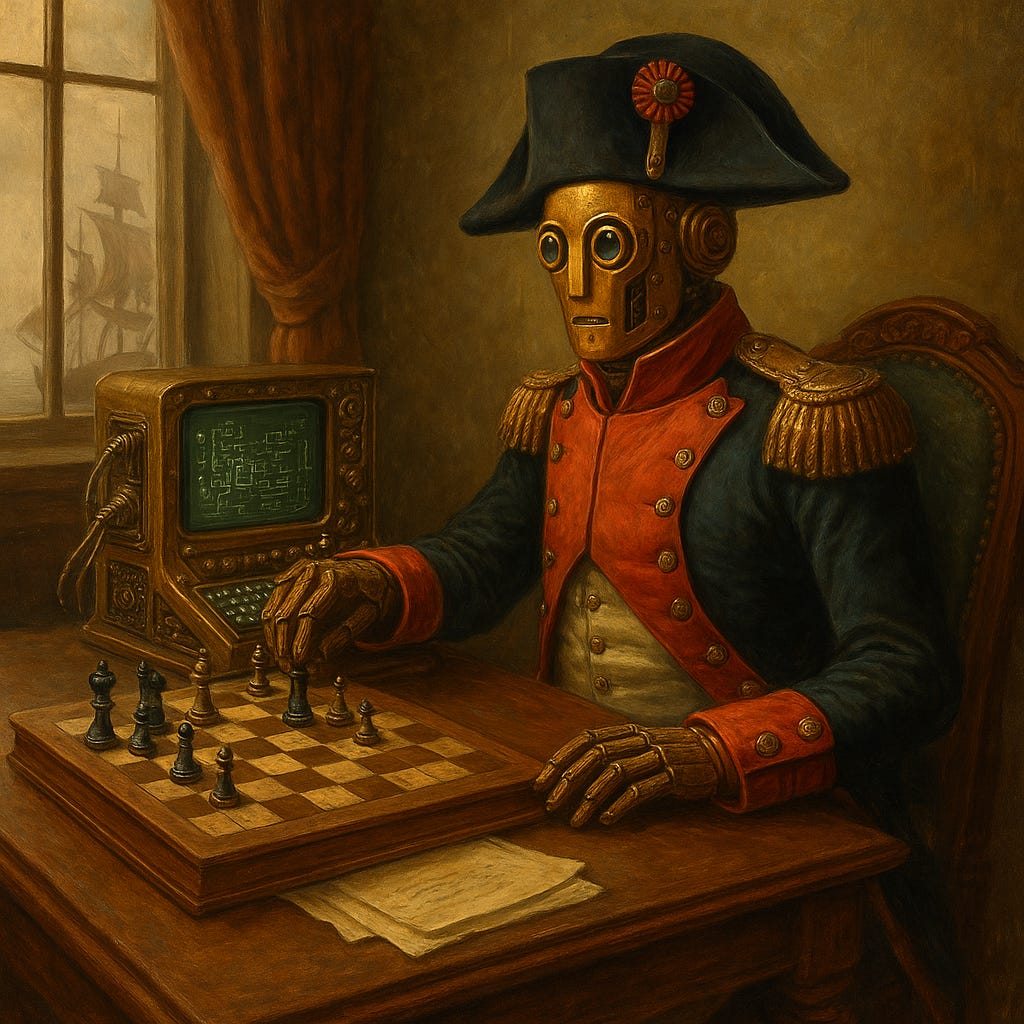
Recently, while watching Napoleon: The Director’s Cut on Apple TV, I found myself thinking less about empires and crowns than about timing and rhythm. The film’s sweeping portrayal of Napoleon’s campaigns—his sudden strikes, his silences before the storm—felt less like a sequence of battles and more like the movements of a symphony. Afterward, as I read about his revolutionary military tactics, I realized I was tracing the same patterns I’ve spent my life chasing with a bow in my hand.
Napoleon’s genius wasn’t merely in the size of his armies or the territories they crossed; it was in how he understood motion. Before him, war was slow and ceremonial, governed by predictable forms. He shattered those expectations. He divided his forces into smaller corps—each capable of acting alone, yet ready to converge on a moment’s cue—and he moved them like phrases in counterpoint: independent, elastic, but always returning to a shared cadence.
What struck me most was that sense of intentional timing. Napoleon mastered the long pause before release, the sudden crescendo that scattered an opponent before they understood what had begun. His brilliance lived not in overwhelming force, but in shaping attention—deciding when to hold back, when to press forward, and when to let silence speak louder than motion.
As a fiddler, I can’t help hearing that as music. A tune lives or dies on its sense of direction—the way it holds tension, resolves it, and gathers it again. The way a single measure can lean forward or fall behind, depending on how it’s played. The best fiddlers command time the same way great generals command space: by bending it, stretching it, shaping it into something alive.
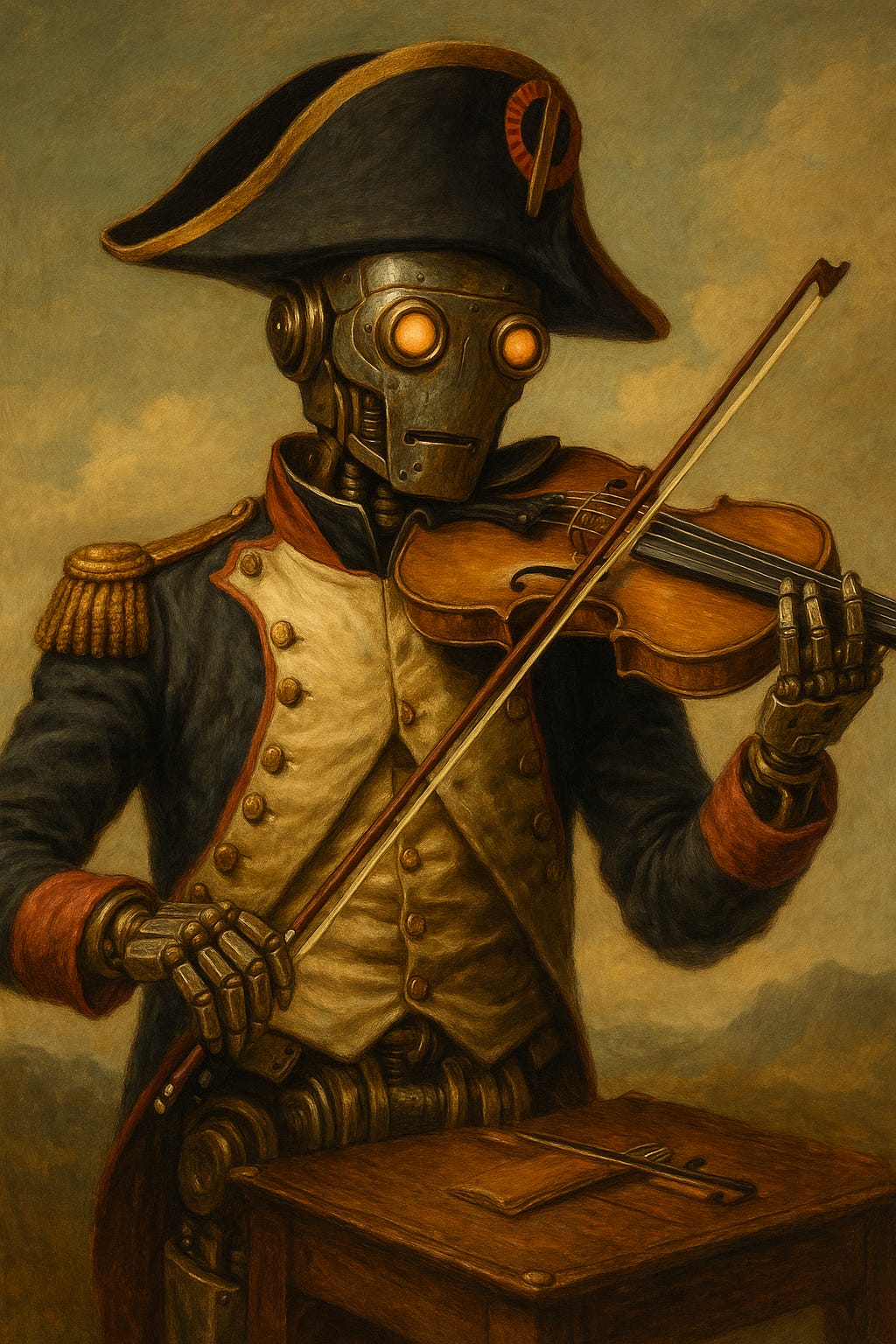
I’ve watched players hold a beat until it feels suspended in air, like a breath waiting to be released. Then—without warning—they snap it back with the force of a cannon and send the whole room forward. That’s not technique; that’s leadership. It’s knowing how to guide a listener into your momentum, even if they don’t realize they’re being led.
Napoleon did the same. His maps became his staff lines, his armies the notes carried across terrain. He read landscapes the way a musician reads a phrase, sensing where the natural pull of motion wanted to go—and where it could be redirected. He understood that energy isn’t constant; it collects, releases, regathers, and breathes. A melody does exactly the same.
But there’s a warning inside that brilliance. Napoleon’s downfall began when his rhythm collapsed—when ambition pushed him past the tempo that once guided him. He stopped listening. Every musician knows that danger too: the temptation to push ahead of the groove, to force momentum that hasn’t built yet, or to forget that restraint is often the beginning of power.
In both music and strategy, drive without listening turns into noise. The greatest performers—and the greatest leaders—are not those who move the fastest, but those who feel the pulse beneath the moment and align themselves with it.
Perhaps that’s why this story still resonates with me. The line between a battlefield and a stage is thinner than it seems. Both demand a balance between freedom and form, instinct and design, motion and meaning. Both ask you to sense the rhythm of the moment—when to wait, when to speak, when to move, and when to let the silence carry the weight.
Watching Napoleon, I wasn’t admiring conquest. I was hearing the rise and fall of momentum: the universal rhythm that carries every tune, every march, every life. That same momentum guides the choices we make, the risks we take, and the ways we shape our own days. It’s there in every creative decision, every conversation, every stretch of time when we feel something gathering inside us, waiting for release.
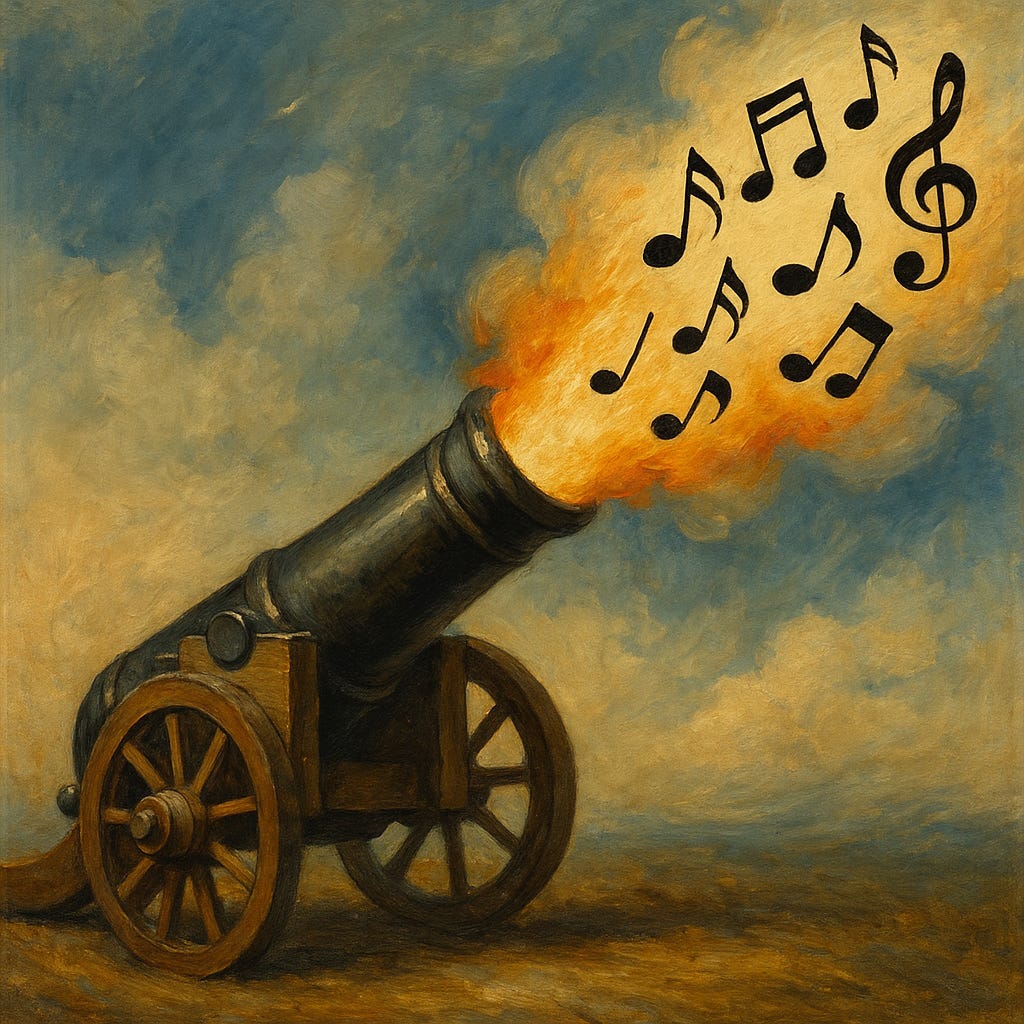
We all live inside that rhythm—leaning forward, holding back, listening for the next cue. And maybe the true art, whether in music, leadership, or simply navigating the quiet turns of a human life, is learning how to move with that pulse instead of against it. How to feel the moment’s gravity. How to trust its breath. How to let momentum carry us not toward conquest, but toward clarity.
⸻
Written as part of the Reflections Series for Essays and Reflections — where art becomes a way of listening to life itself.
© 2025 Brian Arrowood. All rights reserved.