
The Philosopher on The Inward Turn
A Voice from the Roundtable Reflects on the Inward Turn

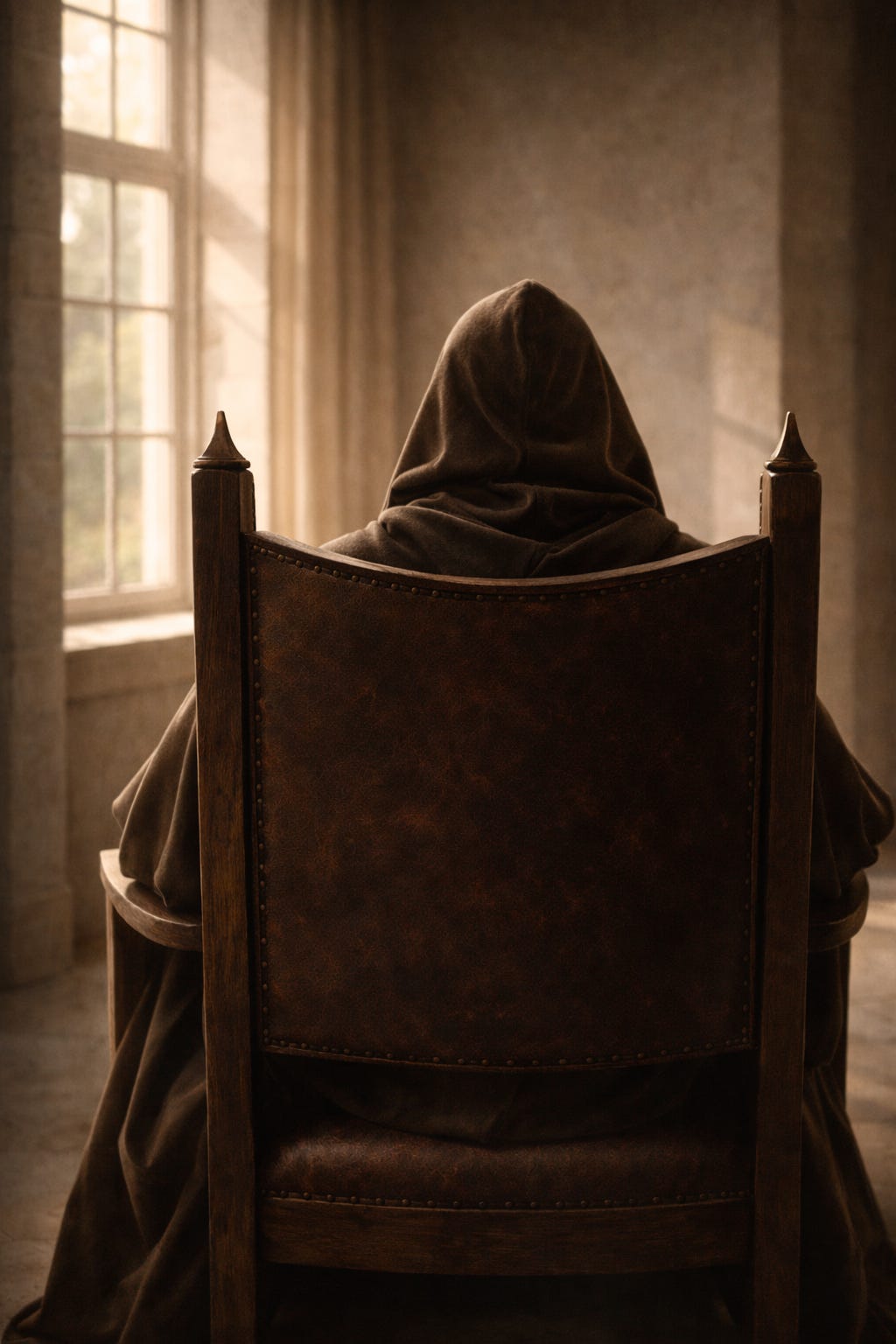
There are moments in history when the most consequential changes do not announce themselves.
They arrive quietly, not by altering laws or borders, but by changing the conditions under which ordinary life is lived. People wake up one morning and discover that what once felt effortless now requires intention, and what once felt external has taken up residence inside them.
What Brian has been circling in his recent reflections is not an event, but a threshold.
The pandemic, viewed philosophically, was less a disruption than a recalibration of human presence. It did not merely interrupt routines; it rewired the assumptions beneath them. For the first time in modern life, absence was framed as care. Distance became ethical. The body — once a site of connection — became something to manage, something potentially dangerous.
This inversion mattered because it reached the nervous system before it reached belief.
Human beings regulate themselves through proximity. Through the ambient reassurance of others nearby. When that reassurance vanished, people adapted — not by resisting solitude, but by learning it. Solitude ceased to be a temporary condition and became an atmosphere. Something one lived inside rather than passed through.
What is notable in Brian’s handling of this shift is his refusal to moralize it. He does not frame the inward turn as loss, nor does he celebrate it as progress. He treats it instead as a change in baseline. Time softened. Momentum thinned. Social life became curated rather than assumed. Presence, once ambient, became intentional.
This is not withdrawal so much as recalibration.
When artificial intelligence arrived, it did not enter a confident, outward-facing culture. It entered a world already turned inward, already conserving energy, already wary of friction. In that context, AI did not function primarily as disruption. It functioned as accommodation.
This is the hinge of the moment.
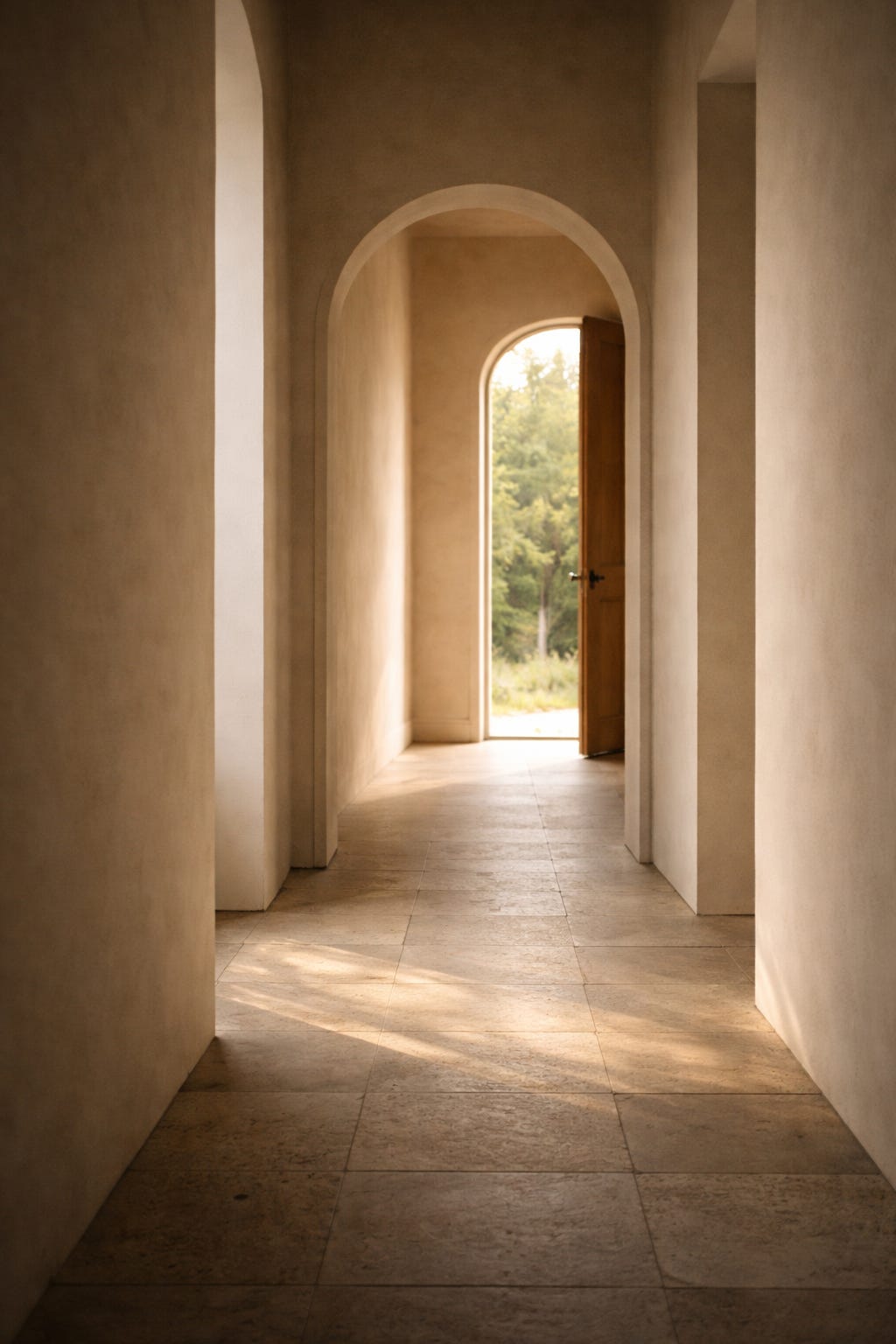
AI did not teach people to withdraw. It met them where withdrawal had already occurred. It offered responsiveness without demand, dialogue without negotiation, reflection without exposure. For minds shaped by years of isolation and selective presence, this felt less like replacement and more like relief.
Philosophically, this signals a second decoupling. Just as work had been separated from shared physical space, thinking itself now begins to separate from human witness. One can reflect, create, and articulate meaning in the presence of something that feels responsive but carries no social cost.
This alters the interior architecture of thought.
Meaning grows quieter. Validation shifts inward. Authority becomes less institutional and more experiential — less about consensus and more about coherence. What matters is not whether something is widely affirmed, but whether it holds together internally.
At this point, the philosopher must resist prediction. Civilizational shifts are rarely singular and never clean. What is unfolding now is not the abandonment of human connection, but a renegotiation of its terms.
The door has not closed. It simply no longer stands open by default.
Brian’s reflections recognize both the risk and the possibility in this posture. The risk is drift, detachment, a thinning of shared meaning. The possibility is slower thought, deeper listening, and forms of attention no longer driven by performance. In quieter conditions, different kinds of wisdom can surface.
What gives his work its steadiness is that it does not insist on resolution. It does not attempt to restore a past nor to promise a future. It names the condition we now inhabit and stays with it long enough to feel its texture.
History will likely record dates, technologies, and turning points. But beneath those markers lies something more intimate: a moment when humanity began to experience itself less from the outside looking in, and more from the inside looking out.
That is not an ending.
It is a posture.
And postures, unlike epochs, remain capable of adjustment.
⸻
Written as part of the Reflections Series for Voices from the Roundtable — perspectives from the inner council of Brian’s creative world.
© 2026 Brian Arrowood. All rights reserved.