
The Unrepeatable Listener
On Music, Listening, and the Meaning Only a Listener Can Complete

Every creator imagines an audience.
Not an audience in the abstract, but someone.
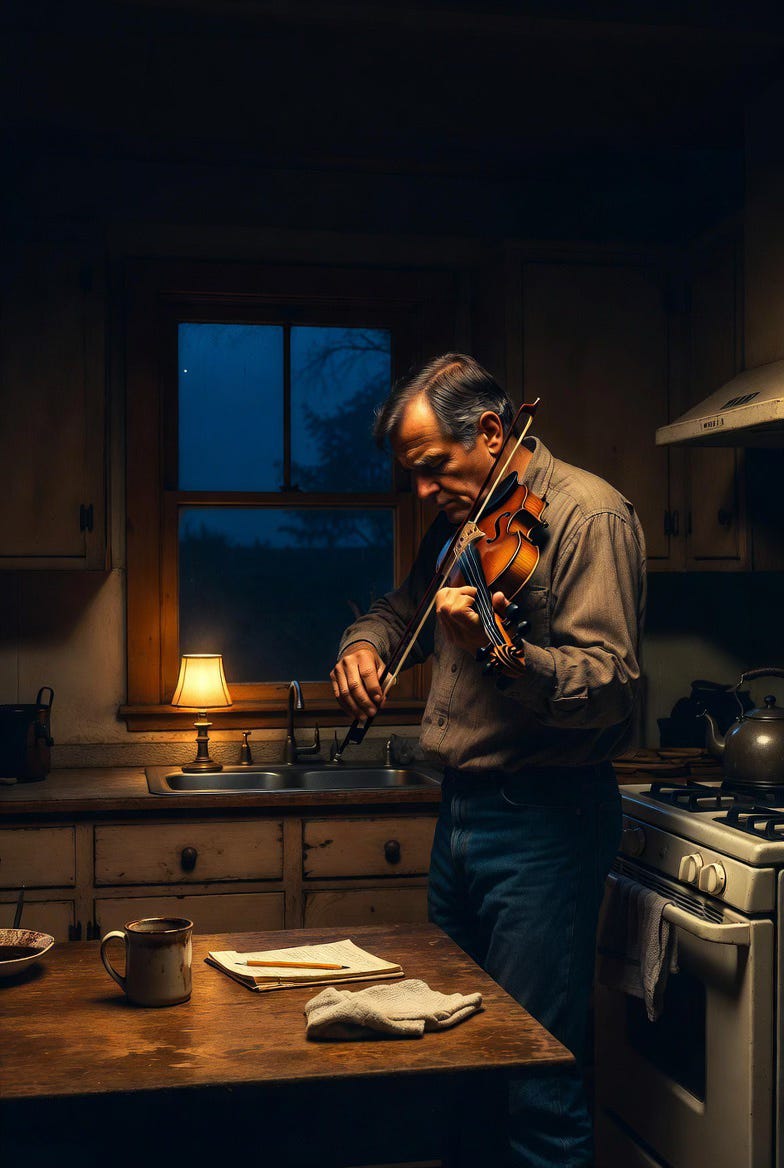
A fiddler sits alone in a quiet kitchen after midnight, working through an old tune one phrase at a time. The room is still except for the sound of the bow returning again and again to a passage that isn’t quite right yet. Somewhere in memory is another sound—a father playing the same tune years before on a porch. The fiddler isn’t thinking about strangers, reviews, algorithms, or history. The music is being shaped for one remembered listener.
The creator can imagine.
History will provide the listeners.
A work may be complete as an artifact—a finished recording, a completed manuscript, a painted canvas—but it can never be complete as an encounter.
The creator can determine notes, rhythm, phrasing, silence, tempo, color, and form.
What cannot be determined is the life that will one day meet those choices.
No creator has ever composed for every listener who will exist.
Meaning cannot be fully specified at the moment of creation because the future cannot be fully specified either.
That is not a weakness of craftsmanship.
It is simply the nature of creation itself.
Old fiddle tunes quietly demonstrate this truth.
A tune like “Devil’s Dream” has survived across generations. The melody is remarkably recognizable despite countless performances by countless hands. Yet no one hears that tune exactly as it was heard when it first entered American musical tradition.
The notes endure.
The listeners do not.
The tune remains alive because every generation receives it from a different place in history and from a different place within itself.
The same principle quietly unfolds within a single lifetime.
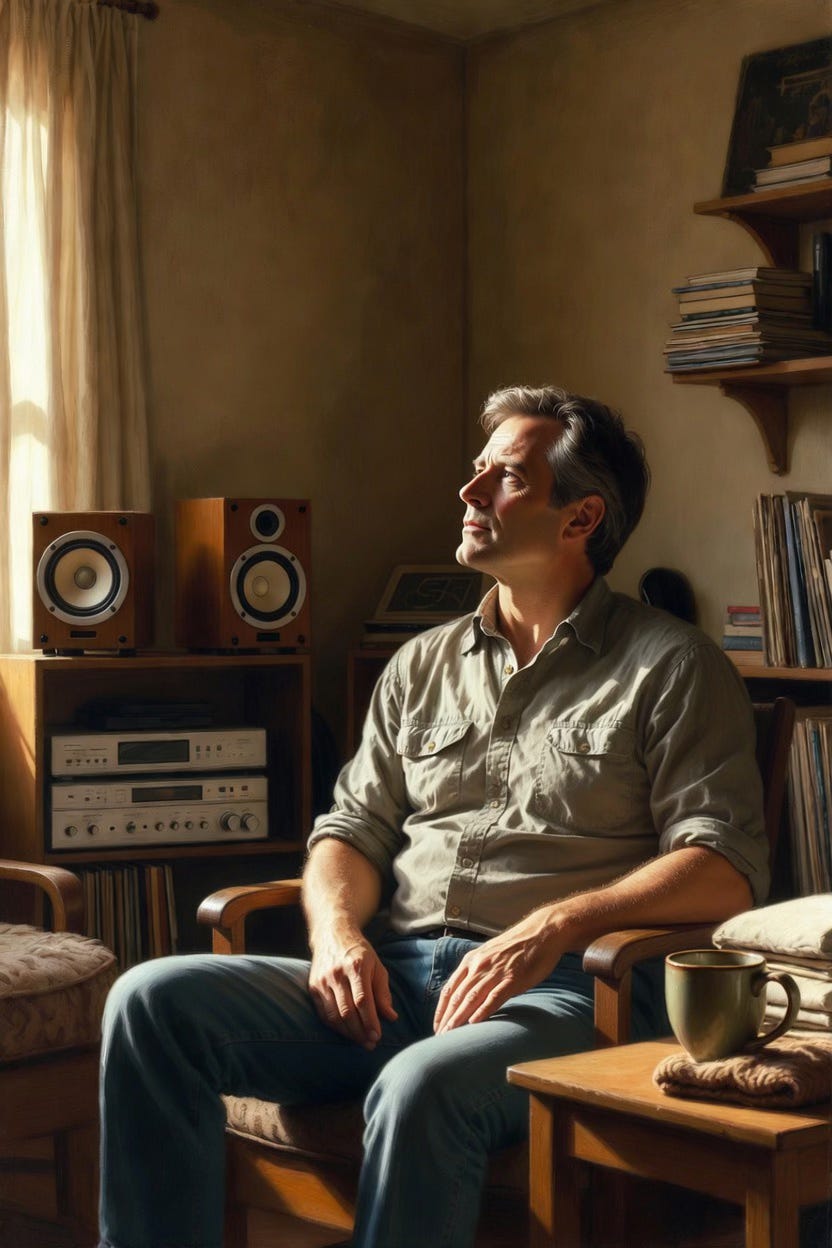
A man in his forties returns to a recording he first loved at nineteen.
The tracks are unchanged.
The order is the same.
He expects the same excitement he remembers from years ago.
Instead, somewhere in a quiet middle passage he barely noticed as a young man, he suddenly hears patience.
The recording has waited faithfully.
He has not.
That moment doesn’t simply reveal something hidden inside the music.
It reveals something that has changed inside the listener.
Meaning is completed differently because the one completing it is no longer the same person.
The performer, too, stands in a different relationship to the music.
The fiddler in the quiet kitchen is listening for one thing only: whether the next pass of the bow finally finds the phrase that has been just out of reach. Every ounce of attention is given to making the music. There is no room left to receive it as someone else eventually will.
Years later, hearing that same recording again, even the performer cannot return as the listener they imagined while they were creating.
Time has already changed them.
The distance between making and receiving is never fully closed.
Completion is an important word.
The listener does not intentionally become another author.
Nor has the creator somehow failed to communicate.
Rather, every listener brings something no creator could ever fully anticipate:
Memory.
Experience.
Expectation.
Those things are not deliberately offered to the work.
They simply arrive with the person who hears it.
Meaning emerges where those two lives meet.
Artificial intelligence unexpectedly helps reveal this more clearly.
For years, conversations about AI in music have asked what artificial intelligence can create.
Perhaps a more interesting question is what it allows us to see.
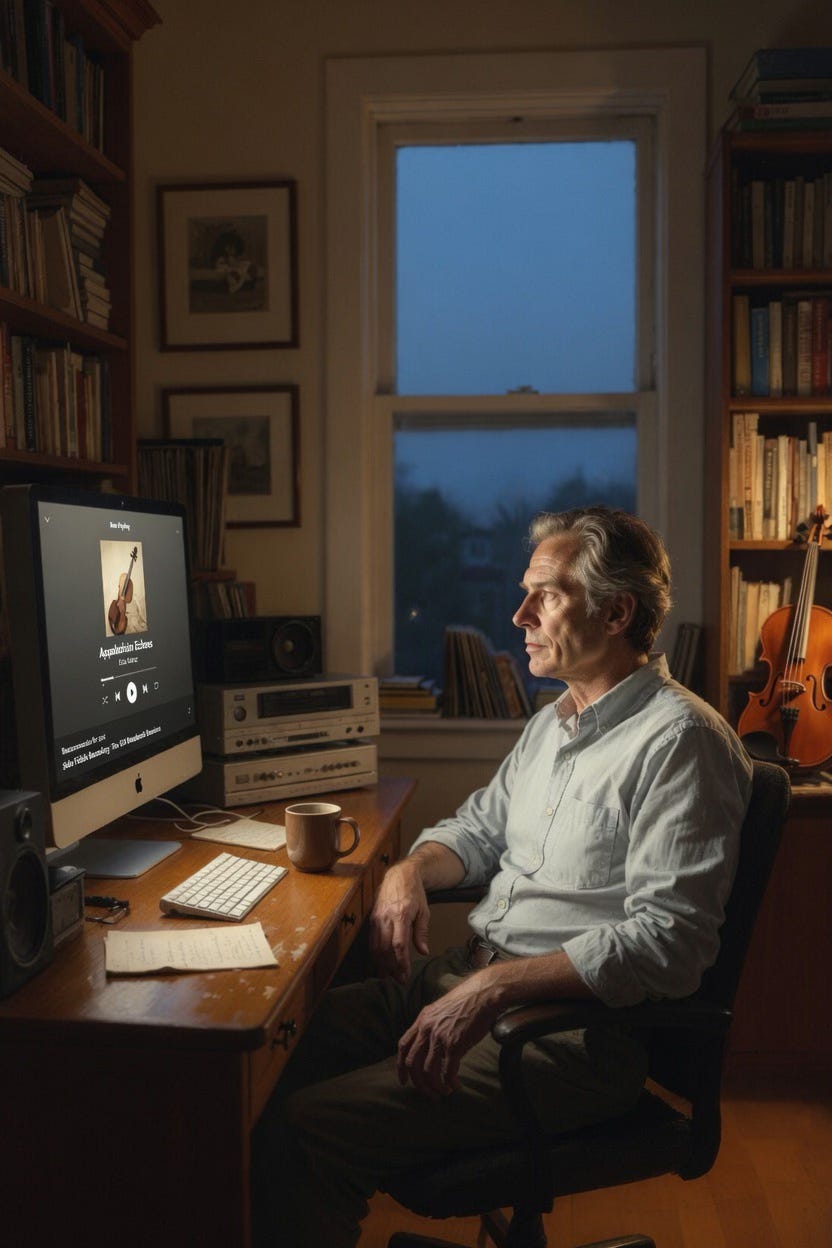
Late one evening, someone opens a familiar streaming service with no particular destination in mind. An unfamiliar fiddle recording appears. The first phrase arrives at exactly the moment it is needed.
The recommendation system knew nothing about the private burden that listener had been carrying. It possessed no intention to comfort. No understanding. No memory. It merely recognized patterns.
Yet the encounter becomes deeply meaningful.
Months later, the same system offers the same recording to someone else entirely—or perhaps to the same listener on an ordinary evening when nothing in particular is being carried. The recording arrives unchanged. The recommendation is unchanged. This time it plays as pleasant background, noticed and then forgotten before the next track begins.
Nothing about the recommendation was different.
Only the listener was.
The system delivered the same recommendation both times.
What changed was the life that received it.
AI did not create this phenomenon.
It illuminated it.
Like a microscope revealing something that has always existed, artificial intelligence allows us to observe more clearly a truth that music has quietly carried all along. Once that becomes visible, it becomes difficult not to recognize the same pattern wherever music is genuinely encountered.
Perhaps every work of music lives two lives.
One belongs to the creator.
The other belongs to every listener who will ever encounter it.
The first gives the work its form.
The second allows it to continue living.
The works that endure continue speaking because humanity continues changing around them.
Each generation hears again.
Each listener arrives with another history.
Each return becomes another first encounter.
The creator can imagine.
History provides the listeners.
And somewhere, years from now, someone neither the creator nor the performer could ever have imagined will hear the same notes and discover something that was never fully placed there—yet somehow was always waiting to be found.
⸻
Written as part of the Reflections Series for Music and AI — exploring the evolving relationship between art, technology, and musical expression.
© 2026 Brian Arrowood. All rights reserved.