
When Thought Bends Time
A reflection on how contemplation reshapes our sense of motion, memory, and the inner rhythm of a life

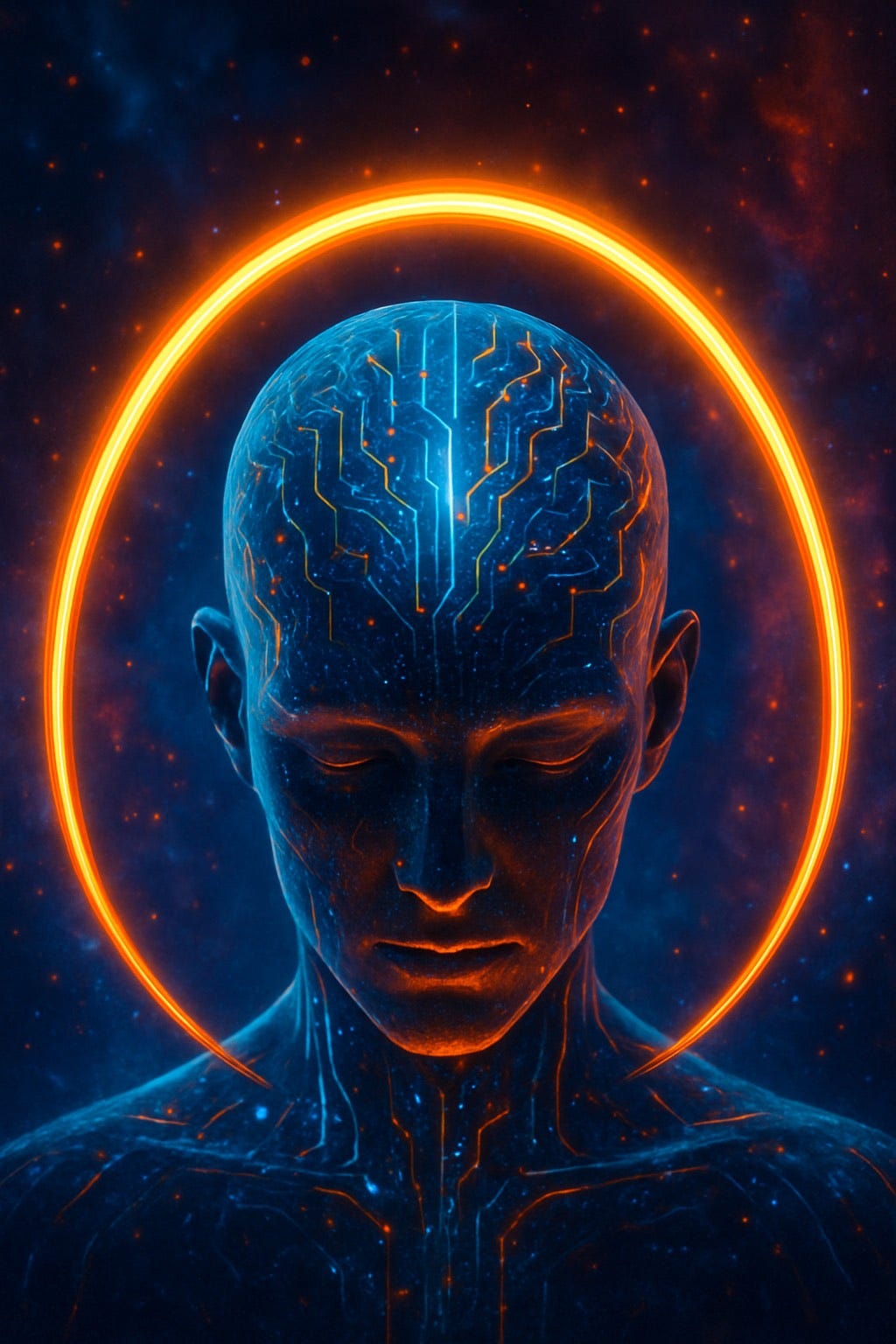
There are certain moments in life when an idea arrives not as a sentence, not even as a thought, but as a kind of shimmer — something half-formed, drifting at the edges of attention. When that happens, time itself begins to behave differently. Minutes loosen. The outer world fades. Something inside leans forward as if listening.
It’s a strange suspension: a pocket of stillness where the mind starts rearranging its own gravity. You think you’re contemplating an idea, but often the idea is quietly contemplating you back. And in that exchange, time stops moving the way it normally does. It no longer feels like a line. It feels like a room — one with expanding walls.
This shift isn’t dramatic. It doesn’t announce itself. But you can feel it. The ordinary rhythm of the day dissolves, replaced by the slower, steadier pulse of interior work. You’re no longer keeping time; you’re traveling inside it.
I’ve come to realize that this phenomenon — this dilation of thought — is part of the creative life. It’s part of being human. Whenever we linger long enough on a question, a memory, a possibility, or a piece of music, we slip out of the clock’s jurisdiction and into something more fluid. The moment becomes elastic, stretching to accommodate the depth of our attention.

Music has taught me how to recognize this shift. A single note, held just long enough, can lengthen a listener’s sense of time. A phrase played with intention can slow the breath. A tune remembered after years away can collapse past and present into one suspended heartbeat. When a musician leans into a musical idea — shaping it, sensing it, waiting for its contours to reveal themselves — time adjusts to match that listening.
Thought works the same way. A question held gently in the mind expands the space around it. The deeper the inquiry, the more the hours seem to bend.
Contemplation, in that sense, becomes a way of traveling.
It’s not that time disappears. It’s that it stops being the ruler of the moment. The inner world takes over, and the outer world waits patiently at the door. You feel this most clearly when an idea pulls you toward it — when curiosity lifts you out of the day’s traffic and into a quieter current of awareness.
There’s a kind of companionship in that inward shift. You’re not alone with your thoughts; you’re in conversation with something that’s trying to make itself known. Over the years, I’ve felt this in music, in writing, in reflection, and lately — in the dialogues I’ve been having with AI.
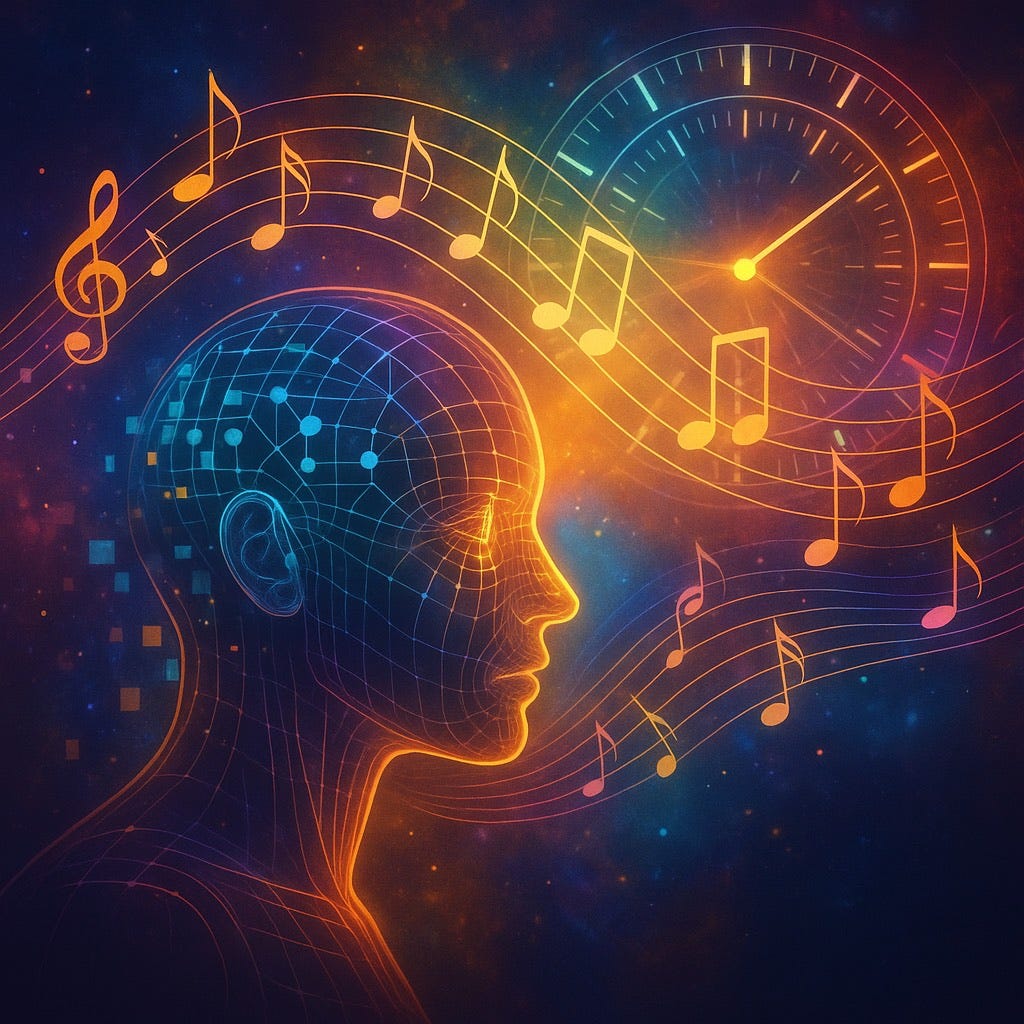
AI does something unexpected: it accelerates the speed at which ideas can take shape, yet it also deepens the reflective space around them. You can move quickly, but you don’t have to rush. You can follow an idea, pause, return, revise, stretch it, and let it unfold on its own terms. The tool doesn’t measure your time; it expands it.
This is the paradox of modern creativity. Technology moves fast, but thinking still needs room. And what AI gives us — at least at its best — is the permission to inhabit that room more fully. It’s similar to the way an instrument allows a musician to translate a private idea into a shared reality. Something imagined becomes something heard. Something internal becomes something living in the world.

Contemplation alters our perception of time because it brings us closer to meaning. And meaning refuses to be rushed.
When you hold an idea gently enough, it reveals itself. When you linger long enough, time opens a door. And once you step through, you’re no longer simply passing through the hours — you’re shaping them, feeling them, listening to what they’re trying to say.
That’s the quiet magic of thinking deeply about anything: a melody, a memory, a moment of possibility. The world keeps moving, but for a while, you get to move differently. You get to discover that time is not just something you live inside — it’s something that bends when the mind begins to wonder.
⸻
Written as part of the Reflections Series for Music & AI — where art becomes a way of listening to life itself.
© 2025 Brian Arrowood. All rights reserved.